Ko-fi

You're a book lover? You need to see these!


We're all book lovers here and we love bookish things. Book blogs, bookish gifts and treats, bookish places, and, of course, books themselves! So, if a round-up of a few bookish things were to come your way, there may just be something within that that piqued your interest. But, where might such a round-up be found? Well, funny you should ask . . .


If you're into book blogs, you could do a lot worse than checking out Linda's Book Bag, which is really what my own blog wants to be when it grows up and stops all its nonsense! 

Linda's book blog is well written, and offers reviews on books from various genres, including crime, thrillers, romance, and children's books. You can tell the content is written with a passion for the subject, a passion which is present in every published post. But, the real reason I include Linda's blog here is simple; it is the blog that has inspired in me most often the desire to make another book purchase.

But, maybe your "to be read" pile is already straining your bookshelves. What then? Well, you could take that desire for another bookish purchase and go see Team Asthers! With bookish products like bookmarks, journals, and tote bags you are spoilt for choice!

They make great gifts (or a little treat for yourself) for the self described bibliophile. I love the designs on their cool classics bookmarks, and think their site is well worth the visit. You can also find them on Twitter and Instagram.

However, maybe you just cannot wait to get another book on your shelves. And, who could blame you? We, all of us here, buy books quicker than we can read them.

Well, if that's the case, I urge you to consider visiting your local independent bookshop. If you're in my part of the world, that might mean a visit to The Eagle Bookshop. Now that businesses are opening up again, our smaller independent bookshops need our help. And, if the booklovers aren't going to do their bit, who will?

Still, it isn't always possible to get to the shops. So, in that case, consider visiting Bookshop.org (which also has a site for American book buyers). Bookshop is a fantastic site that supports independent bookshops; 10% of what is spent by customers goes into an overall earnings pool and this is then, every six months, shared between the participating independent bookshops. And, during Indie Bookshop Week (19 - 26 June 2021), that 10% is going to increase to 20% - sounds like a good week to make book buys.

If Jeff Bezos can afford to get in to space, I don't think he and his ilk will miss your contribution to their coffers. But, the local bookshops sure might be grateful you dropped by - especially with how independent businesses have been impacted by the pandemic.

As for books themselves, I am currently reading The Accidental Further Adventures of the Hundred Year Old Man by Jonas Jonasson, which I am thoroughly enjoying thus far, with William Boyd's A Good Man in Africa on the side, to keep me on my toes. I will be discussing both in future posts, so keep your eyes peeled for that.

None of the links in this post will take you to anyone that is going to pay me for sending you to them. There are no commissions involved this time. I just really like what these people are doing, and maybe you will like them too.


If you like what I am doing, please consider following/supporting me over at ko-fi where I update followers on many of my writerly endeavours, including what's going on here at my rather bookish blog. Every donation makes a difference, but if you can't donate right now, please do consider a follow.

Thank you, and see you again soon!

Stories in the sun


It's June, and, here in south east England, the sun has been shining. So, just like every good English person under the slightest sliver of sunshine, I find myself in a summery mood! With that in mind, I am going to take a little look at a few novels, and one novella, that are set in the summer time.


The Great Gatsby by F. Scott Fitzgerald

In my younger and more vulnerable years my father gave me some advice that I've been turning over in my mind ever since. And so begins this modern classic of American literature. Published in 1925, this short book (148 pages) tells the story of Jay Gatsby, through the eyes of Nick Carraway, and the characters around him. This is a story of decadence, longing, and tragedy. For, although Gatsby is a self-made man, known for his champagne-fuelled parties, he longs for Daisy Buchanan. And, in the telling of this story, we follow that longing to its tragic conclusion.


To Kill a Mockingbird by Harper Lee

This book first came into my life when I was at school, as a book assigned to the English class. And now, I have my own copy standing proudly on my shelves. Like the previous entry, this book is something of a modern American classic. It tells the story of a lawyer defending a black man, who is accused of the rape of a white girl, in the Deep South of the 1930's. Through the eyes of young Scout and Jem Finch, the novel explores themes of prejudice, violence, and hypocrisy - themes still all too relevant today, sixty-one years after the novel's publication. 

Apt Pupil by Stephen King

I was torn between including this title or The Body, both novellas by King and featuring in his collection, Different Seasons. However, I opted for Apt Pupil because I think the other title (upon which the film Stand By Me is based) is the better known, and I would prefer to look at the lesser known story. So, in this offering from King, we are told the tale of Todd Bowden, the pupil of the title. He is an all-American kid, but, in his neighbourhood, a familiar and human evil lurks. And, as his curiosity reawakens that evil, it might just end up corrupting him too.


The Remains of the Day by Kazuo Ishiguro

I took a look at this novel in more detail in an earlier post (here), and would wholeheartedly recommend it to anyone that hasn't read it yet. It is a beautiful book. As we follow Stevens, the ageing butler of Darlington Hall, on a road trip deep into the countryside of England in the summer of 1956, the story explores themes of lost causes and lost love. It is a novel that explores those things that go unsaid, those things that can't be undone. It is a sad but beautiful story, and this Booker Prize winning novel is worthy of every ounce of praise it has received.


If you enjoyed this post, please do consider following/supporting me over on ko-fi where I post an update each time I publish a new post here, and I offer up some of my other writerly endeavours for scrutiny. Ko-fi is a platform specifically for creatives and their followers, and all support is gratefully received - it makes a real difference.

A Few Banned Books


If you pursue bookish/writerly endeavours of your own, please do keep reading to the end of this piece . . . .

Even back when tweeting was just the sound a bird made, people felt awfully threatened by thoughts and words they didn't agree with. But, you can't block a book or its author, so, instead, some tried to ban the works instead. What follows are a few of the books from my shelves which, at one time, in some place, have been banned for various reasons.


Brave New World by Aldous Huxley

Anyone that has visited my blog before, or perused previously published posts (do love a bit of alliteration), will know that I have a lot of time for Huxley. Huxley had the courage to critique the absurdities of politics and society as he saw them. In Brave New World, the author demonstrates how an ideal society might be created through the use of genetic engineering, brainwashing, recreational sex, and drug use; a dystopia presenting as utopia. The novel was banned in Ireland when it first appeared, in 1932, because they saw it as taking a stand against religion and the traditional family, but even just ten years ago a piece was published in The Guardian newspaper suggesting it was a book that many Americans took offence with (here is the article).


Animal Farm by George Orwell

Much like the author in the preceding entry, Orwell's fame stems from works that analyse and criticise political and social ills. Along with 1984, this novel secured George Orwell worldwide fame and recognition. However, not all of that recognition was favourable. Animal Farm is a veiled attack on Stalin and his brutal brand of communism. As you can imagine, the work was banned in the USSR. However, it is also, even today, banned in both Cuba and North Korea, both communist countries under a dictatorship. You might also be interested to learn that many countries in the Islamic world also have a ban on the novel. Why? Because it features talking pigs.


The Catcher in the Rye by J. D. Salinger

This book has been held up as a classic by its fans; a book that takes an honest look at the cares, fears, anxieties, and ennui of teenage life. Its protagonist, Holden Caulfield, is one of literature's defining moments in exploring adolescent angst. However, this novel was the subject of a ban in American schools almost since its publication. Being seen as a subversive text that included far too much sex, swearing, and violence for some to feel comfortable with (though, I don't think you are supposed to feel comfortable reading these books, that's kind of the point), one teacher in Tulsa, Oklahoma, was even fired in 1960 for assigning the book to his class. As an interesting aside, the novel popularised the slang term "screw up" - Boy, it really screws up my sex life something awful.


Lady Chatterley's Lover by D. H. Lawrence

Sex. We all have some relationship with it, many of us have had pleasant experiences because of it, and a lot of us want it. But, boy, that doesn't stop us from feeling pretty damn uncomfortable around it. This novel is erotically charged and explores adult relationships, and the gulf between classes. And so, of course, it was banned. The book was published in 1928, but it was banned in England, America, Canada, Australia, India, and Japan. It wasn't until 1960 that the novel was published, as an unexpurgated edition, in the United Kingdom, which resulted in an obscenity trial, under the Obscene Publications Act 1959. Penguin Books was found "not guilty" by the jury, and the publisher dedicated the second edition to the three women and nine men who made up that jury.


Thank you for reading this piece. In an upcoming post, I would love to promote others who pursue bookish/writerly endeavours. So, if you have an Etsy shop that sells bookish gifts, or you have a writerly/bookish blog, or anything else that's bookish/ writerly, all I want you to do is come and follow me on Twitter (here), and send me a message there, or a comment beneath my pinned tweet, with any links to websites or social media platforms you would want potential customers to know about!

I hope you enjoyed this piece. If you did, please consider following/supporting me on ko-fi - if everyone who read this piece donated just the minimum, it would be a huge boost, and it would be gratefully received. 

Thank you, and see you soon.


Why Does E=mc2? (and why should we care?) by Brian Cox & Jeff Forshaw - an analysis and review


Everything you need to know about the central theme of this book you will find in the title. The authors, Professors Cox and Forshaw, take on Albert Einstein's most famous equation. And, in doing so, they attempt to make understanding what the equation means accessible to the layperson. Though there is a little maths in the book, the authors do all they can to explain as simply as possible the notions of energy, mass, and light.

The professors tackle this equation because it towers over scientific understanding. Indeed, as the authors explain, within this equation lies how nature is structured. We travel from the big bang, to our own humble little planet, and beyond. Along the way, we meet questions that great minds have been able to answer, as well as those science hasn't tackled yet.

Something that really comes across in this book is Cox's and Forshaw's respect for scientific method; that it doesn't care how smart someone is, or how clever their hypotheses might sound, but that if it falls down at experiment then it is wrong.

In general we look for a new law by the following process. First we guess it. Then we compute the consequences of the guess to see what would be implied if this law that we guessed is right. Then we compare the result of the computation to Nature, with experiment or experience, compare it directly with observation, to see if it works. If it disagrees with experiment it is wrong. In that simple statement is the key to science. It does not make any difference how beautiful your guess is. It does not make any difference how smart you are, who made the guess, or what his name is - if it disagrees with experiment it is wrong. That's all there is to it.
- Richard Feynman, quote mentioned in the book

As well as a book about this most famous of equations, it is also a book that demonstrates a great love and respect for physics, and science in general. It's quite humbling really.

I enjoyed this book. If you've ever seen a Brian Cox documentary, you'll know that his passion for his subject is appealing, and that comes across in the book. As I say, there is some maths included, but it is not vital to the understanding of what the authors share with us. They strive to make the subject understandable. Personally, I can glaze over a little when equations are on the page, but I have still come away from the book better informed. And a little richer for the experience too.

This book is now about eleven years old and, as we know, scientific understanding is constantly evolving. For example, since this book was published, the Higgs boson has been found. So, if you want thoroughly up-to-date information, you might wish to supplement your reading of this book with more recent publications. However, in general, what is written here still stands. After all, Einstein's work has stood up against testing now, over half a century since the man left this world.

If you would like to purchase a copy of Why Does E=mc2? by Brian Cox & Jeff Forshaw, you can do so here; bookshop.org supports independent bookshops.

If you enjoyed this piece, please consider following/supporting me over at ko-fi where I update followers on blog posts here, and on other writerly endeavours. Ko-fi is a platform specifically for creatives, and all followers/supporters are very much appreciated.

Thank you, and see you soon.

A Few More Films Based on Rather Good Books


As well as the books I love, I also enjoy a good film, and the last post I published on films based on books I so thoroughly enjoyed writing that I thought I might do another one. It should be noted though, before we get into this piece proper, that where I mention streaming options for some of these films I am basing those details on what is available here, in the UK. Sorry, everyone else. I do still love you though.

Room (based on the novel by Emma Donoghue)

I've read the book, but not seen the film. However, with a Rotten Tomatoes rating of 93%, I am expecting the adaptation to be quite good. 

Brie Larson won an Academy Award and Golden Globe for her performance in this film. She plays Jack's mother, trying to give her five-year-old son as normal an upbringing as she possibly can. A tall order when Jack has spent the entirety of his life so far in one room! Having been held captive by her abductor for years, Jack's "Ma" decides they must try and escape. And so, Jack will be introduced to something greater than he has known so far - the world outside the room.

Room is currently available to stream on Netflix.


Rosemary's Baby (based on the novel by Ira Levin)

Ira Levin's novel was the bestselling horror novel of the 1960's, and the film is one of the best horror films ever made. With a wonderful performance from Mia Farrow as Rosemary, and an Oscar winning performance from Ruth Gordon as one of her odd neighbours, if you haven't seen this perfect horror, it might be time you did so. 

Rosemary's husband, an ambitious but, so far, unsuccessful actor, makes a pact with the devil. And, from that act, the horror unfolds.

Rosemary's Baby is currently available on Amazon Prime from £2.49


IT (based on the novel by Stephen King)

They don't come much creepier than killer clowns. And Pennywise is about as creepy a killer clown as they come. Partly, of course, because he is much more than a simple murderous clown.

If you've read the book, you'll know what a hefty thing it is (clocking in at over 1000 pages), and so, when it was adapted for the big screen a few years ago now, it might come as no surprise the story was split into two films.

I enjoyed the book, and I enjoyed the film. The book is well crafted, and if you're a Stephen King fan but you've not read this one, I don't think you'll be disappointed. Though, like I say, it is a biggun. Of course, films based on King books can be a bit hit and miss, but I think this film is enjoyable enough.

IT is currently available on Amazon Prime from £3.49


Joker (based on the Batman comics character, created by Bill Finger, Bob Kane, and Jerry Robinson)

From one murderous clown to another . . .

Anyone familiar with the Batman comics will know that this character is the Dark Knight's most dangerous adversary. Seemingly completely detached from reality, but intelligent and with a desire for destruction, the Joker is the character that keeps coming back. He is also the adversary that has most affected the hero of the comics.

When Todd Phillips' Joker was released in 2019, there were some questions raised as to the need for a film about this character (a murderous white man), but I don't think there's any denying that the performances are solid and the story is decently told. And, as for those objections, I don't think we ought to sympathise with the character, but understanding the descent of the character might be worth the time.

Joker is currently available on Amazon Prime from £13.99


Let The Right One In (based on the novel by John Ajvide Lindqvist)

There is a distinctly bloody and horrific theme running throughout these suggestions. Well, why break the habit now!?

However, Let The Right One In, like the novel it is based on, is not quite a straightforward vampire horror story. No, in this story you will find themes of what it is to be an outsider, and forging a friendship even when it might seem doomed. And, the vampire here is no cardboard cutout vampire, but a cursed and tormented character. It is also a beautiful portrait of adolescence. It is perhaps that more than it is a vampire film.

Let The Right One In is currently available on Amazon Prime.


American Psycho (based on the novel by Bret Easton Ellis)

It's another bloody one. Sheesh! I know!

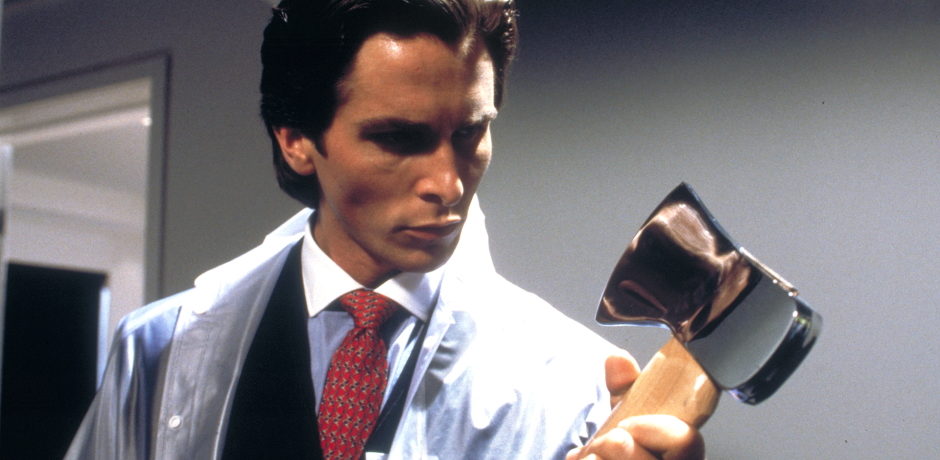
Patrick Bateman is a monster that fits nicely into the 1980s world of greed, money, and shallow self service. He has very little interest in anything beyond maintaining a pleasing veneer, and exploring the dark and intensely violent urges he has. And, though he often fears that his mask of sanity is slipping, it seems as though the world in which he lives is one that does not recognise the monster he is. For, it seems, it is not only he that is only interested in superficial and selfish desires.

The book is not an easy read. The film is not an easy watch. There is much violence. And, as I say, Bateman is a monster.

American Psycho is currently available on Netflix.


I hope you enjoyed this piece. If you did, perhaps you would consider following/supporting me on ko-fi, a platform specifically for creatives, and a great place to keep up to date with what your favourite creatives are up to. All support is gratefully received.

Thank you, and see you soon.


Author earnings and other bookish concerns.


In a previous blog post, I visited the topic of how authors get paid. It wasn't, I think you'll agree, an in depth look at the topic, but it is something of interest to me. And, it should probably be a topic of interest to you, if you read books. And, if you're reading this blog, you probably do read books.

Unless you've taken a wrong turn somewhere out here in the vastness of the internet . . .

Authors, generally speaking, earn far less than the minimum income standard for their writing, and rarely is it the case that a writer is able to work solely as a writer, to be able to afford a decent standard of living. There are many instances of writers earning more from giving talks than they do from sales of books. Even then, being a writer is not the profession to opt for if you want to, you know, earn enough money to live off. It's a damn struggle.

When I came across this article in The Guardian (01/06/2021), about a new initiative to get authors earning royalties from the sale of secondhand books, it put a smile on my face. And, you do wonder, when you think about it, why it hadn't occurred to anyone before now.

Out of a necessity to budget, and my bank account being almost perpetually overdrawn, I have often opted for a secondhand book when drawn beyond my will to making another book purchase. And, being slightly aware of how authors earn royalties from sales, I have felt guilt because of that. Though, I shouldn't have to - no one should be priced out of access to books.

I fully support the initiative to get authors royalties from the sale of secondhand books. We need to support our authors as much as we can. Authors don't earn enough for the time and effort they put into their work, and they earn less, on average, than they did just ten years ago. As readers, we need to support them. Otherwise, you lose it.


As an aside, I also believe in supporting independent bookshops. I know the local Waterstones is convenient, and they have some nice little gifts too. I know that Amazon isn't going anywhere. But, we need more than that. We need bookshops whose identities are informed by the local community in which they have come to being, we need bookshops that support local economies, we need bookshops that are concerned with more than the company brand. 

I have allowed myself a link to the Waterstones site on this blog because I have shopped with them. But, it's just the one general link on the home page. Every link, in every book review blog post, that takes you to the specific book being discussed in that post, takes you to bookshop.org. It just sits better with me to recommend a site that supports local bookshops. Because, after all, Mr. Bezos and his ilk don't need any more money.

Though some of his employees could do with a little more . . .


As book readers, we are also consumers. We are supporters of those authors that line our bookshelves. Those authors who sacrificed house work, time with loved ones, and days out so they could get that work out of their head and onto the page, never really sure that anyone would ever read it. But, they persevered nonetheless, and they put hours, days, weeks, months, or maybe even years, into writing and editing. And, they can still end up getting paid a pittance.

I don't always shop as ethically as I could. But, I try, and being aware is a pretty good place to start.


If you enjoyed this piece, or even found it useful, please do consider following/supporting me on ko-fi. Ko-fi is a platform specifically for creatives, and it's a great way to keep up to date with what your favourite creatives are up to. All support is gratefully received.

Thank you, and see you soon.

Some reading challenge ideas


Reading challenges can be a great way of getting out of a reading rut, or just introducing something a little different to your TBR pile. Or, it can just be a little bit of fun . . .


A book published in the 1970's

I plucked this decade from thin air. There is no special reason as to why this decade need be the decade you use for this little challenge. In fact, if you want to expand on this little challenge, you could read a book published from every decade over the last century. That sounds like a fun little challenge, and perhaps a way to introduce new books to your shelves. It might also be fun to see how the art of writing has evolved. The great thing about this challenge is that you can pick any genre, any author. But, since I picked the 1970's, let me offer a few suggestions, such as, Carrie by Stephen King; Breakfast of Champions by Kurt Vonnegut; Fear and Loathing in Las Vegas by Hunter S. Thompson. There are plenty of other great titles to choose from this decade.


A book that features a wedding

Now, this one is a tad more specific, and might at first suggest a selection from the romance genre. And, though it does sometimes unfairly get looked down upon, it is a genre worth exploring. Whether it's Pride and Prejudice by Jane Austen, The Time Traveler's Wife by Audrey Niffenegger, or Jane Eyre by Charlotte Brontë, there are plenty of romance novels to choose from. However, weddings aren't always an indication of love and happiness. The unsuccessful wedding of Miss Havisham, in Dickens' Great Expectations has much to do with the shaping of her character and, in turn, the events of the novel. And, in The Princess Bride by William Goldman, the plot is very much driven by the main character's desire to stop a wedding.


A book that has inspired music

Apparently, Katy Perry's song, Firework, was inspired by a passage in Jack Kerouac's On The Road. And, Kate Bush's Wuthering Heights shares its title with Emily Brontë's novel for the very simple reason that it was inspired by the book. In fact, there are a number of songs, in various genres of music, that have been inspired by literary works. If nineties grunge is more your thing, Kurt Cobain was influenced by Patrick Süskind's Perfume when he was writing lyrics for the songs on Nirvana's album, In Utero. Whatever, your favoured genres of music are, there are probably a few songs in your library that are influenced by novels. Why not get your hands on one of those books, and read it while you listen to the music? 


A classic

Chances are that there is a classic title you've had recommended to you, or seen discussed online, that you haven't got around to reading. And, sometimes, the pretentious can make you feel as though you are obliged to read these books. Otherwise, how can you say you're a real bibliophile, right? Well, don't let them put you off. The classics are just stories, just books like the modern ones we read. They come with a certain amount of respect and cultural weight because, after all, they have endured, sometimes for a century and more. Personally, I am a fan of Dickens. But, I would also recommend Oscar Wilde's The Picture of Dorian Gray, or Bram Stoker's Dracula (discussed in greater detail here). However, don't lert me tell you what to do. Go find a story you like the sound of, and find a classic for you.


A book you've been had recommended to you

If you're a book lover, and you have bookish friends, chances are, as mentioned above, you've had countless recommendations thrown your way. Reading a book is a very private thing a lot of the time, unless you to choose to read your book aloud to others. And, when we read a book that rocks our world, or one that we just really enjoy, we want to share it with anyone and everyone. Well, pick up one of those books you have been recommended. We follow enough algorithms and advertising in this world, we might be a little better off if we followed the recommendations of some of our living, breathing, loving fellow human beings a little more too.


A book published the year you were born

This one, a little like the first suggestion in this piece, is flexible in terms of genre. Only rule is that it be a book that was published the year you were born. For me, I might pick up Margaret Atwood's popular novel, The Handmaid's Tale. Or maybe The Accidental Tourist by Anne Tyler. What about you? What books were published the year you were born? Any of them look good?

(Extra points to you if you figured out the year I was born!)


Well, I hope you enjoyed this piece. If you did, perhaps you would consider following/supporting me on ko-fi. Ko-fi is a platform specifically for creatives, and is a great way to stay up-to-date with what they're up to. All support is very much appreciated!


Thank you, keep reading lots, and see you soon.

The Hundred Year Old Man Who Climbed Out of a Window and Disappeared by Jonas Jonasson - a review and analysis


Disclaimer: If you make any purchases through links in this blog, I may earn a commission from the seller, but that does not impact upon the cost to you as the consumer, nor does it influence the content of this blog.

I did tell you in my last post that I would be discussing this book, and, true to my word here we are!

The central theme of this novel is taking chances, and accepting what it is that life throws your way. The character of Allan Karlsson is a carefree one-hundred year old man, tolerant of a great deal that life has dealt him, but who will also remove himself from undesirable situations if he can. He manoeuvres these undesirable situations with little fuss and fanfare, just taking himself off onto the next chapter of his life. But, he will also tolerate a great deal if he has to; he takes imprisonment, a stay in an asylum, and interrogation in his stride, during the course of his eventful life. His habit of taking himself off when the need arises, or when he just fancies a drink or two, plus his tolerance and acceptance for all sorts of people and experiences, has meant that Allan has found himself in all sorts of company with many stories to tell.

Over the course of Allan's one hundred year long life, he has spent time in the company of communists, capitalists, democrats, revolutionaries, priests, leaders, and other colourful characters. The story of Allan climbing out of the window and disappearing is juxtaposed with the story of his life. That story demonstrates his character, his experiences, drawing upon figures and events from the last century (1905 - 2005). In putting Allan in positions where he spends time with politicians, the religious, and events from the past, the author is also able to shine a light on the comedic absurdities of politics and organised religion. Something clearly of importance to Mr. Jonasson who, unlike his centenarian creation, cares about political and social issues.

I have always loved stories about road trips and adventures, and this is one of those books. Though Allan isn't really an adventurer. When he climbs out of the window of the old people's home where he lives he doesn't do it in search of adventure. He does it because he has had enough of being there, and because he imagines there are probably better things to do elsewhere. If nothing else, somewhere he can get a drink. Allan Karlsson had never been given to pondering things too long. He kind of just goes for it.

As already mentioned, the story is more than just the tale of Allan's taking off out the window, and eventually on a road trip across Sweden with colourful characters, and a suitcase full of money (plus a couple of dead bodies left behind for good measure!). No, though that story sounds interesting and entertaining enough on its own, the author tells the story of Allan's life too, switching between past and present, a device that I enjoyed. It added more depth to the story. It, as I say, allowed the author to explore political and social issues over the last century, pointing out the absurdities, but it also demonstrates Allan's character, making him more real. And, it is a pleasure to travel with him too!

The modern historical events used as a backdrop to the plot of the novel drew me in to the story. Allan's life is kind of fantastic, and he is kind of a fantastic character, the very real events in which he finds himself, and the opportunity to see them through his eyes, warmed me to the character. Allan himself has very little interest in political discussion, but he finds himself in a world full of it. And, I came away feeling that sometimes it really takes a character who has no interest in politics, somebody who stands outside of those concerns with political and social issues, to see the oddities of politics. I mean, if you've ever taken the plunge into the comments of a political discussion on Twitter, you'll know some people can get a little lost in political ideology, almost to the point of getting a little disengaged from reality!

Allan really is rather a simple character though. If he had had enough food to eat, a decent supply of vodka to drink, and an adequate form of shelter where he could sleep, you get the impression he might have happily spent his life in that one place. In fact, there are points in the telling of his life where he does exactly that, spending years in one place, content to pass the time. His excursions and adventures are often prompted by those events that surround his life. This is another theme of the novel - the way in which the times we live in shape who we are. Allan's story really is the story of the events and experiences he has had. He concerns himself little with the details of the events that impact his life, though they shape the way in which he navigates his life, and the world in which he lives. And, those people he meets on his journeys, those who are impacted by the events related, are shaped by time and place in which they live, their beliefs and personalities directly influenced by them.

Allan's approach to life is almost fatalistic. Things are what they are, and whatever will be, will be. He plays the hand he is dealt, uncomplaining the vast majority of the time. So, of course, he climbs out of a window, of course he takes a suitcase full of money from a criminal gang, of course he ends up on a road trip across Sweden with a group of various characters, and of course he has many stories to tell. We might benefit from adopting a little of Allan's approach to life.

I will leave the last words of this piece to the author himself, quoted from an interview related in the final pages of my copy of the novel:


To go to the village sauna each Saturday afternoon, to sit there among grumpy old men, just to be updated about what's happening in the neighbourhood. But I think a lot of people really should consider the possibility of climbing out of their window. My perspective is that we only live once, I cannot be sure but that is what I believe. I think that if you've once asked yourself: 'Should I . . .' then the answer should be: 'Yes!' Otherwise, how would you ever get to know that you shouldn't?

- Jonas Jonasson


If you're intrigued, you can purchase The Hundred Year Old Man Who Climbed Out Of the Window and Disappeared by Jonas Jonasson, the global bestseller, here, from bookshop.org. Bookshop.org supports independent bookshops in the UK, and offsets carbon emissions from every delivery.

If you enjoyed this piece, or found it useful, please do consider following/supporting me over on ko-fi. Ko-fi is a platform specifically for creatives, and a great way to keep up to date with what they are up to. If you can donate, it makes a world of difference. And, all support is gratefully received, and very much appreciated.

Thank you, take care, be safe, read lots, and see you soon.

A few more reading challenges


The last post I published on reading challenges (here) proved to be quite popular, so, because I am so good to you, here are a few more challenge ideas. I do like the way in which challenge ideas can draw readers to those books that they might not otherwise have read, so I hope that this brings something new into your "to be read" pile. If not, I hope you at least enjoy this piece!


A book about, or heavily featuring, a car/cars

Under this challenge, I might recommend On The Road by Jack Kerouac, which, when I first read it as a teenager, captured me with its depiction of life on the open road of mid-twentieth-century America. Kerouac's tale of sex, drugs, and beat life, depicts perfectly the restlessness of post World War II America youth, with their lost innocence and desire for something more than the dream that was offered. Or, perhaps you would prefer Stephen King's Christine, which tells the story of a car apparently possessed by evil supernatural forces and the hold it has on its owner. Whatever book you choose for this challenge, you might end up in the fast lane!


A book about, or heavily featuring, drugs and/or alcohol

We all know James Bond, Ian Fleming's creation, liked a martini, and throughout the series of Bond novels you'll find spirits, cocktails, and beers aplenty! Or, perhaps you'd prefer Brave New World by Aldous Huxley, in which Huxley's dystopia makes use of the fictional drug, Soma, to keep society in check. I am a big fan of Huxley and would recommend his most famous work to anyone that hasn't read it. When it comes to the use of hard drugs, Trainspotting by Irvine Welsh, and Junkie by William S. Burroughs (drug use can be found throughout much of Burroughs' work), both in their own ways depict the users world in a raw and honest way. 


A book for self improvement

Now, with this one, we could go the route of the self-help book, and if you do so, you'll have plenty of choice. The last book I read that concerned itself with the problem of how to attain happiness was a book called Happiness By Design by Paul Dolan, a Professor of Behavioral Science. In this book, the author explored how purpose and pleasure are the main constituents of happiness, and how to get that balance just right. In the not too distant future, I plan to read, and discuss here, Peter Jones' How To Do Everything and be Happy. In this book, the author tries to take an approach to maximising happiness using practical methods, such as the use of diaries, lists, and scheduling. I will discuss this one, as I say, in a later post. However, self improvement doesn't mean a visit to the self help section, it could be that there is a non-fiction book you have been meaning to read that could lead to you developing a better understanding of politics, history, science, or art. Anything really. What self improvement means to you is really up to you!


A book that makes you cry

I suppose with this one, it need not be a book; it could be a poem, or a play. And they need not be tears of despair, but tears of joy. Still, we ought not to be afraid of those works that bring a tear to the eye, or maybe even a stream of tears. Those feelings are just as valid as happiness, and don't we read partly so that we can explore those feelings in a safe way? I know I do. In this category, I might recommend Eleanor Oliphant is Completely Fine by Gail Honeyman, a book that can be a hard read, but a book that deals with themes of loneliness and mental illness beautifully. I might also recommend One Flew Over the Cuckoos Nest by Ken Kesey, which is one of those stories that, to me, blends hope and brutality. Whatever it is for you, I urge you not to shy away from those books that make you cry.


A book you never get tired of

Again, it needn't be a book. I could never get tired, I don't think, of reading and rereading The Raven by Edgar Allan Poe. It is such a beautiful, gothic, musical poem, and if you haven't read it, I wholly recommend it. Or, see if you can find James Earl Jones' reading of it on the internet! Oh, that voice! Or, I am rereading The One Hundred Year Old Man Who Climbed Out of a Window and Disappeared by Jonas Jonasson, a book I fell for, as did many others, when I first read it. I will be discussing this book in an upcoming post too. This challenge is a comforting and cosy challenge, perfect for blankets and coffee along with that book you love. Or, if not coffee, something a little stronger perhaps.


Children's/YA books

On my shelves I have a book, a Winnie the Pooh book, that I had when I was a child, and I have as much respect for that book as I do for anything Tolstoy or Dickens ever wrote! It is beautiful. And, those books we love as children, it could be argued, can have a greater influence on us than those we embrace as adults. I also have Batman and Deadpool graphic novels standing on my shelves, those comics and superheroes I loved as a kid and a teenager . . . Well, I still love them. I'm sorry. I just do. As for YA fiction, I might suggest The Perks of Being a Wallflower by Stephen Chbosky, a book that deals with themes as weighty as anything you might find in Ishiguro. Go on, immerse yourself in a kids book, or a book for teens. An opportunity to revisit childhood, or those tumultuous teenage years.

I hope you got some ideas from this little piece, and if you did enjoy it, perhaps you would consider following/supporting me over on ko-fi. Ko-fi is a platform specifically for creatives. If every reader donated just the minimum, it would make such a difference to me. But, if you can't, but you have a ko-fi page of your own, do consider following. Thank you.

Stay safe, read lots, and see you soon.

How to be a rather bookish blogger


Every blog is different because each blogger is different. And, presumably, every blogger starts blogging for different reasons. So, there is going to be plenty that you will need to figure out for yourself. You don't want to follow a formula, because then you end up with something formulaic. However, I can tell you a little bit about my own experience, and you can take from that what you will.

Beginning

When I started blogging, I didn't really have a clear idea in my head as to why I had started blogging. I have an interest in writing - writing stories and poetry, pitching to magazine editors, etc. - and blogging was just another avenue to explore in pursuing that interest.

Of course, as a writer, I have taken more than my share of rejection, and the great bonus of starting up a blog seemed to be that I could write, publish, and attract readers without having to go through an editor, publisher, or agent (this can also be considered a negative - having to go through this is something that must be learned at some point as a writer). And so, I started a blog.

If you look back at earlier posts, I think you can tell that they are a bit less well structured, a bit less well written. I was still experimenting, and I do believe it shows. I haven't altered them though since I originally published them. I kind of like that they are there, reminders of how I have progressed.

Aside from my still experimenting back then, figuring out what was possible and the identity of this space, I didn't, as I said, really know why I had started the blog. I settled on writing about books and bookish things because I love to read, as simple as that. But, there were no goals or ambitions beyond having a place to write, preferably with a few readers along for the ride.

Ambitions have developed though as I have progressed. I have come to see that having a blog can be a great way to demonstrate my ability as a writer for those other writerly pursuits I undertake. Also, I have joined a couple of affiliate marketing schemes. However, I have tried to keep advertising in this space tasteful - this blog will never be primarily about trying to sell anything, it will always be about books and bookish things.

My interest in using this space to try and gain some supplementary income was really instigated by my losing work during the first UK lockdown, last year, because of the Covid-19 pandemic. However, as I say, making money will never be the primary goal. I suppose, having some sort of community is the goal, reaching out to people who share similar interests, values, and passions.

Writing articles

From the other book blogs that I have seen, I have noticed that a lot of bloggers have genre specific blog content. Whereas, you may have noticed, my content is more diverse. The original idea being that I would simply discuss those books that make up my bookshelves. I'm not sure if this holds me back - potential readers being put off by my lack of specificity - or whether the broad range of books I discuss might be a help in the long term. Time will tell.

Beyond discussing the books I read, I also decided to write and publish posts about bookish related topics. So, if you explore the blog, you might find posts on how to make time for reading (here), films based on books (here), or even on my experiences as a bookish blogger (this post you're reading right now).

It's hard to say which posts are going to be popular and which ones aren't. And, besides, posts tend to garner attention incrementally, or at least they do in my experience. However, my most recently published posts which have been relatively popular are ones on reading challenges (here), and a review of Kazuo Ishiguro's The Buried Giant (here). But again, other posts have gained attention as well and reader numbers increase incrementally.

Outside of analysing and reviewing books that I have read, I have written a few list pieces, "how to" pieces, pieces inspired by news items . . . Pretty much anything bookish related that captures my interest, is a joy to write, and hopefully of interest to readers. And, chances are that if it is a pleasure for you to write there will be someone for whom it is a pleasure to read.

I think my one piece of advice would be to persevere. Even if you are writing and you suspect that no one is reading, you started blogging for a reason. If you still have that reason, and the writing is good, and getting better, the readers will come. 

Of course, getting the readers to come may mean having to leave the blog for a while . . .

Followers/support

Social media, especially Twitter, has been great in terms of finding support, even something of a community.

On Twitter, I have felt embraced by the book blogger community. From sharing each others' blog posts, to tagging each other to boost awareness of your efforts, the Twitter book blogger community has been wonderful. They are gosh darn friendly bunch too!

Beyond Twitter, I don't really make much use of Facebook for my bookish/writerly pursuits, simply out of personal preferences, but you can sometimes find me sharing bookish things on Instagram, though my bookish interests there are nestled amongst other of my interests too.

Away from social media, I have also set up a ko-fi page. Ko-fi is a platform specifically for creatives, and it is designed as a way for those creatives to stay in touch with supporters and, yes, to try and garner some monetary support for their efforts. This I set up with a view to gaining some donations for my writing, and also as a space for sharing what I am up to and learning from others.

Unfortunately, ko-fi hasn't garnered any donations/support for me yet, money wise at least, but I have found other creatives on there who have been kind enough to offer support in other ways (following my page, critiquing work in progress, etc.) which is very much appreciated.

Going forward, I have made something of a little promise to myself. I will, in the not too distant future, and at least once a month, donate to other creatives on the platform. It is pretty tricky to get support as creatives, and I have come to the conclusion that you gotta give, even if you don't get. If you're not getting, you know how hard it is, right? Give someone else that little boost!

Search engine optimisation

Okay. I am not going to talk about this one very much at all because . . . Well, because I don't know very much about how to make use of it, to be honest!

However, I am aware of it, and I am trying to learn more about it and how to make use of it. This because a better understanding of SEO can improve readership numbers, and at a certain point a desire to see your blog grow will kick in. So, search engine optimisation is something to be aware of and, if you're not sure of how to make use of it, research.

Again, the community on Twitter has been a great source of support in my pursuit of trying to better understand SEO. If you are just starting out as a book blogger, just search "#bookblogger" on Twitter, and immerse yourself into the wonderful world of the book blogging Twitterverse!


This piece can be taken as a bit of a "how to" guide to bookish blogging, but really all I can tell you is how I went about putting my blog together. However, maybe you hate the look of my blog (how could you!?), and you want to do something totally different. And, of course you do! You're you, and I'm me, and you should make the blog that you would want to read. Whatever you do, I hope you found this post useful, or at least enjoyable.

If you did like this post, or any others, perhaps you would consider following/supporting me on ko-fi. Ko-fi is a platform for creatives, and it's a great way to stay in touch with followers and supporters. Any and all donations/support are received gratefully and are very much appreciated!

Stay safe, and see you soon.

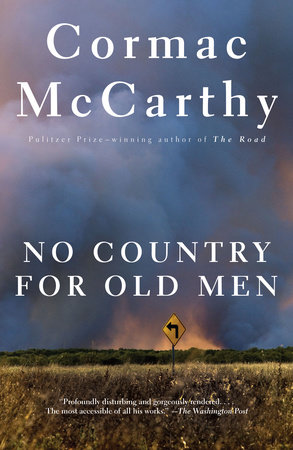
No Country For Old Men by Cormac McCarthy - an analysis and review


Disclaimer: should you make any purchases through links in this blog, I may earn a commission from the sellers, but this does not effect the cost to you as consumer, nor does it influence the content of this blog.


When I read No Country For Old Men by Cormac McCarthy, it felt like a book that should have been written a long time ago, a book that was a part of the world long before I ever came into it. A classic. It is so well written that I could only assume that the author belonged to another time and place, a time and place that I couldn't possibly be fortunate enough to inhabit. But, this book was published in 2007, and I share this planet, and this time, with its author, Cormac McCarthy.

The blurb description reads: Llewelyn Moss, hunting antelope near the Rio Grande, stumbles upon a transaction gone horribly wrong. Finding bullet-ridden bodies, several kilos of heroin, and a caseload of cash, he faces a choice - leave the scene as he found it, or cut the money and run. Choosing the latter, he knows, will change everything. And so begins a terrific chain of events, in which each participant seems determined to answer the question that one asks another: how does a man decide in what order to abandon his life?


Before I really get going with this post, I would like to give a special mention to Team Asthers whose Etsy shop is full to the brim with bookish treats and gifts. If you like bookish things, and of course you do, you should check them out. I'll wait . . .


Okay. Here we go . . .

Cormac McCarthy's novel contains within its pages a few central themes, including morality and ethics; fate, chance, and freewill; justice and the law; and how times change. This final theme is directly and explicitly referenced in the title of this novel.

Sheriff Bell, one of the book's protagonists, ponders very much upon how the times have changed as we follow him throughout the story, and how he fears that things have worsened. And, as he turns these things over in his mind, and in conversations, he does sometimes make a pretty good case for these fears being based in more than just an older mans romanticising of the past.

As Kirsty Wark is quoted as writing, for Observer Books of the Year, 'It is an intensely intimate story. It is also a warning.'


Sheriff Bell is a veteran of World War II, Llewellyn Moss, of the Vietnam war. And, when Moss stumbles across the drug money, deciding to take it for himself (His whole life was sitting there in front of him. Day after day from dawn till dark until he was dead. All of it cooked down into forty pounds of paper in a satchel.), Sheriff Bell ends up having to try and track Moss down. In part because Moss has Anton Chigurh on his tail.

Chigurh represents everything of which the Sheriff is afraid the world is becoming. He kills without feeling, without concern, and without fear. As one character in the novel puts it to Llewelyn, "Even if you gave him the money he'd still kill you. There's no one alive on this planet that's ever had even a cross word with him. They're all dead".

But, it isn't simply that Chigurh is an unfeeling killer, it is the way he moves throughout the story, seemingly untouched by events, visiting death on everyone he meets. He acts like fate, indeed makes reference himself a number of times to how he sees fate at work in his life, has put him where he is, and to do the things he does.

Chigurh is one of literatures most chilling characters. As I say, a representation of all that the Sheriff, so concerned with ethics and justice, fears for the way of the world.

This story is sparked by a moment of chance, when Llewelyn comes across the deal gone wrong, and from there we follow as these characters impact upon one another. How each of them makes decisions which impact upon the others, bringing, more often than not, violence and death to each other. Indeed, fate and freewill, moments of chance and the decisions made in those moments are a central theme of this story.


It is quite fitting, in my opinion, that the Coen brothers made the film adaptation (mentioned in another blog post here) because I did think the story, with it's everyday characters, and violent death, a tad Fargo-esque. Not wholly so. This book is more original than that. But, it seems a fair reference point to mention when trying to explain it to anyone who might not have read it yet. And, if you've seen the film adaptation, but not read the book, the film is pretty faithful to the book. So, if you enjoyed one, I expect you will enjoy the other. I did.

If you're intrigued, you can purchase No Country For Old Men here, from bookshop.org, who support independent UK bookshops.


I do hope you found this piece enjoyable and/or useful. If you did, perhaps you would consider following/supporting me on ko-fi. Ko-fi is a platform for all sorts of creatives, and it is a great way to follow/support and stay in touch with those whose work you enjoy.


Stay safe, and see you soon!


Good Films Based on Books


Disclaimer: If you make a purchase through links in this blog, I may earn a commission from the seller, however, that does not impact the cost to the consumer, nor does it influence the content of this blog.

This is a relatively simple post to follow. It's simply a brief list of films, ones that I think are worth a watch, that are based on books or short stories. Simples.

Okay, here we go . . .


The Secret Life of Walter Mitty

Starring, and directed by, Ben Stiller, this film takes James Thurber's dreamer character and gives us a film about how good and beautiful life can be. How hopes don't just have to be something we carry around in our heads to get us through dull days.

Rotten Tomatoes gives the film a pretty average rating of 51%, and in parts it can feel a tad slow. But, if you're a bit of a dreamer like me, I think you will like following Walter on his adventures as he goes from a world of fantasy to embracing life real. There are some really beautiful moments in this film. But then, I think I might be a bit of a Walter Mitty myself.

You can purchase The Secret Life of Walter Mitty by James Thurber here from bookshop.org, who support independent bookshops.


No Country For Old Men

When this Academy award winning film came out in 2007, Javier Bardem's character, Anton Chigurh, became one of film's most chilling characters. A killer who kills without a second thought, and definitely without any feeling for his victims. And, when Llewelyn Moss stumbles across a drug deal gone wrong, and a whole lot of money, he finds Chigurh, amongst others, after him.

The Coen Brothers' film stayed pretty damn faithful to the book, so if you liked the book, I imagine you will like the film, and vice versa. I liked the film a lot, and I will be writing about the book in a future post here, on this blog.

You can purchase No Country For Old Men by Cormac McCarthy here from bookshop.org.


The Silence of the Lambs

And, speaking of chilling characters, they don't get much more chilling than Anthony Hopkins' Hannibal Lecter. In fact, Hannibal the Cannibal is one of those characters that has developed cultural reach beyond the books/films where we first met him. And, though Mads Mikkelsen gave him a run for his money, Hopkins' turn, in my opinion, is still the best portrayal of this charming monster.

Again, as with the previous entry, the film is pretty darn faithful to the book. Though, you will find bits in the book that are missing from the film, a little more texture to the characters. But, again, with this one, if you liked either the film or the book, I think you will probably like the other.

You can purchase the book behind the Oscar winning film here from bookshop.org.


The Shawshank Redemption

This film, which went pretty much unnoticed upon cinematic release back in 1994, is a hard watch in places but is ultimately beautiful. It's based on Stephen King's novella, Rita Hayworth and the Shawshank Redemption, and is, in my opinion, a must see. 

Andy Dufresne (played by Tim Robbins in the film) is a mild mannered banker who is found guilty of murdering his wife and her lover, a golf pro that she was having an affair with, and is sentenced to life imprisonment. He is taken to Shawshank Prison where, at first, he doesn't make any friends, and corruption is rife. Eventually, Andy's talents as a banker come to the attention of the warden . . .

You can purchase Different Seasons, a collection of stories by Stephen King in which Rita Hayworth and the Shawshank Redemption appears, here from bookshop.org.


Well, that's my brief list of films based on books or short stories. I think they're pretty good. What do you think? Seen them? Want to?

If you enjoyed this post, or found it interesting, please consider following/supporting me over at ko-fi. Ko-fi is a platform for all sorts of creatives, and it's a great way to keep in touch with followers. All support is welcomed and appreciated.


Thank you.

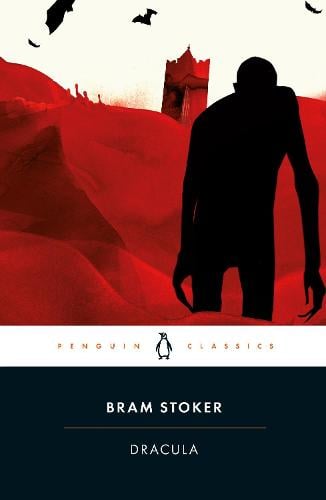
Dracula by Bram Stoker - an analysis and review


Disclaimer: If you should make a purchase through links in this blog, I may earn a commission from the sellers, however that does not effect the cost to the consumer and has no influence over the content of this blog.

Bram Stoker drew upon a visit to Whitby in 1890, stories told to him by Ármin Vámbéry, a Hungarian-Jewish writer, about the Carpathian mountains, and the mythology of vampires when he wrote his most famous novel, Dracula. However, he didn't depend purely on inspiration, and he spent several years researching locations, and the mythology of the vampire, making plenty of notes, before he began to write the novel proper.

What he created has endured, and Stoker gave the world one of its most well known monsters.

The structure of the novel is epistolary, made up of diary entries, newspaper cuttings, and notes made by the characters. In Stoker's work as newspaper writer, he would have been well acquainted with the practice of collecting together snippets of sources like this and collating them.

In this way, the world we are drawn into is always seen through the eyes of the characters within it. And so, we see the monster, Count Dracula, the King of Vampires, through the eyes of the characters too. We experience their fears, their apprehensions, anxieties, and hesitant hopes. In this way, that famous vampire is always shrouded in the fear and uneasiness the characters' feel because of him, so feeding the tension of the narrative. More so than if the novel had just been a straightforward telling from third person perspective.


The novel has inspired analysis regarding sex and sexuality. From the three female vampires in Dracula's castle, seductively trying to draw their intended victims unto them, and the slight homoerotic tones in Dracula's hold over the character of Jonathan Harker ("he has a fearful hold upon me"). These have, in part at least, been inspired by analyses of Stoker's own sexuality (he appears to have endured a passionless/sexless marriage, and he was associated with other gay figures from the Victorian literary world, such as Oscar Wilde, and a great admirer of Walt Whitman). 

On reading Dracula, the reader does notice that Stoker seemed to have had a preoccupation with what the role of men and women ought to be, how the gender roles ought to be played. There is much talk of admirable and good "brave men", and the character of Mina, Jonathan Harker's fiancé, is spoken of admiringly by the male characters in the novel for her support of their cause. It might not be too much of a stretch to draw the conclusion that Stoker, in his writing about sex and gender roles, was trying to exorcise some of his personal preoccupations and fears.

Dracula has also deals with the theme of illness, and the spread of disease. Again, something of which Stoker was personally acquainted, having been bedridden in his childhood with an unknown illness. Indeed, throughout the novel the reader finds imagery of sickness and descriptions of characters, such as Lucy Westenra, having to take to their beds with feelings of sickness. 

Dracula's taking of blood, and offering his blood to victims, his control of animals like bats and rats, thought dirty and carriers of disease, also suggest the writer's exploring the theme of disease, and how disease is spread. Dracula is even able to spread his condition of vampirism to other character's in the novel.


The character of a Dracula has since become a pop culture icon that can be found in comic books, cartoons, films, and even advertisements. But, Stoker's creation, the character that inspired them all, is a more complex monster than many of these two-dimensional renderings would have you believe.

This King of Vampires is centuries old and was once a military leader. However, by the time that we meet Dracula at the beginning of the novel we find that this is but a memory, though he is proud of his warrior past. We also learn that Dracula is very intelligent, and he is proud of his high ranking ancestry.

As an "Undead", and a scholar of black arts, Dracula possesses great strength and supernatural abilities. He is capable of changing form, controlling animals, and his appearance seems to change throughout the novel, especially as relates to his apparent age. He is also, however, bound by certain laws, some perhaps well known to you, like his aversion to daylight and garlic.

The plot of the novel stems from the Count's desire to move from his castle in Transylvania to London, England. To do so, he employs the solicitor, Jonathan Harker, which is where the story begins . . .


If you would like to purchase a copy of Dracula by Bram Stoker, you can do so here. Bookshop.org supports independent bookshops, and offsets carbon emissions from every delivery.

If you found this piece interesting or enjoyable, or hopefully both, please do consider following/supporting me over at ko-fi. Ko-fi is a platform for creatives and is a great way for them to keep in touch with their fans/supporters. All support is gratefully received and very much appreciated!

Thank you for reading, stay well, and see you soon!