Ko-fi

Showing posts with label analysis. Show all posts

A Room With A View by E. M. Forster – analysis and review


 Disclaimer: this blog is affiliated with third party sellers, and if you make a purchase through links in this blog I might earn a small commission from the sale. However, this does not impact the cost of any items, and it does not influence the content of this blog.


E. M. Forster was known for writing on the theme of hypocrisy. And he did so wonderfully in this 1908 novel, a sunny story about love and social convention – this has been called the most readable of Forster's novels. This is a critique of Edwardian restraint. It is also a consideration of expectation and propriety, and how they stand up to genuine feeling and truth. Though the Edwardian era may be an alien world to many modern readers, these themes are everlasting. Do we not still live in a world of people torn between expectation and genuine feelings?


Lucy Honeychurch is visiting Italy, with her prim and proper cousin Charlotte acting as chaperone. And this is the beginning of things. Between the unconventional Emersons – Mr Emerson and his son, George – and her family, Lucy is pulled between social expectation and what stirs in her own heart. Confused by her feelings, she begins to wander down the path that she believes she ought to travel. But signs that this is not the way of greatest fulfillment and happiness reveal themselves.

The heart and truth must win out . . .


At 114 years old, the conventions and hypocrosies that Forster critiqued here might seem dated to the modern reader. But what does not date or become irrelevant is the struggle of trying to bridge the gap between one's inner and outer life. That is something that many a reader can understand. The question of being true to oneself when that might just upset your whole world. 

Forster though, a gay man who lived in a time and place when it was criminal to be so, knew that the heart must win. That truth and real feeling should rise. A world without these, a world of empty ceremony and loveless engagements, is a confusing and suffocating world.


You can purchase a copy of E. M. Forster's A Room With A View here.


Before you go, would you please consider supporting this blog, buying a coffee for the author via ko-fi.com?

A small tip from readers is much appreciated.

If you enjoyed this piece, don't forget to share, leave a comment, and subscribe for future posts.


Surrounded by Idiots by Thomas Erikson (and what I learned about myself)


Disclaimer: this blog is affiliated with third party retailers. If you should make a purchase through links in this blog, I might earn a small commission from the sale. However, this does not affect the cost of the books, and it does not influence the content of this blog.


I am a smidge of yellow, green, and blue. Though there is not much red in me, if any at all, that I can see. Though I was in a relationship with a red and I did not enjoy that very much at all.

By this, I mean that I am optimistic, creative, and easygoing (yellow); considerate, thoughtful, and a good listener (green); cautious, methodical, and unassuming (blue).

My ex was ambitious, impatient, and controlling (red). 

But, enough of all that . . .


Surrounded by Idiots is a method for assessing everyone that we communicate with, and how to communicate more effectively. The book uses the DISC method  of describing human communication and behaviour, and from there discusses and explores better means of how to understand, and be understood by, the people we meet. 

Erikson points out that, as we communicate with others, whatever our intentions, the people to whom we are speaking or writing will always receive what we say through their own lens. We all have our own points of reference, our own experiences, and our own individual levels of intelligence through which we filter the information we receive. So, communication depends very much upon the recipient. 

Erikson posits that once the reader understands this the easier they will be able to express themselves to others, and that the communicator will be able to adapt their message to the recipient.

The book also makes an effort to point out that all colours, all behaviour types are needed, and are of value. Because, as it turns out, we are not surrounded by idiots, just people who are reading a different map than our own.


I began this post with a little tongue-in-cheek revelation about myself and an ex-partner. Well, sort of lighthearted. 

This book reminds the reader to consider themselves and how they relate with others. The relationship between two people depends upon the effort that each makes to understand the other. If you cannot meet the listener, the person you are trying to reach, if you cannot make the effort, at least, then the breakdown in communication is the responsibility of each of you.

But this is not a blame game. This is about getting better. And that always has value, and is worth a try. For that reason alone, this book is worth a read, and worthy of its popularity. 


You can purchase a copy of Surrounded by Idiots by Thomas Erikson here


Before you go, would you please consider supporting this blog with a coffee from ko-fi.

I resist ad space here as much as possible, hoping to generate conversation rather than clicks. With the support of readers, I can write freely, with regard only for my own experiences and research, rather than commercial influence.

I am writing this blog post on my phone because my laptop appears to be on its way out. Any small donation will be very much appreciated – ko-fi.com

Thank you.

Oscar Wilde by Richard Ellmann - analysis and review


Disclaimer: this blog is affiliated with bookshop.org and Waterstones. If you should make a purchase through any of the links in this blog, I might earn a small commission from the sale. However, this does not impact upon the price of the items, and it does not influence the content of this blog.


Oscar Wilde's life was lived in two parts. In the first part, a famous literary man, celebrated and satirised in almost equal measure, an outrageous figure, but a respected author and playwright of Victorian London. In the second part, he was an exiled man, nearly broken by two years of prison and hard labour, fated to die lonely, scraping by on donations from the few still willing to give.

In this Pulitzer Prize-winning biography, Richard Ellmann brought the subject's life into sharp focus, from Wilde's fame and flamboyance, to his pain and depressions. Wilde is brought to life here.


It has been said that Wilde almost lived his life as though he were planning to be the ideal subject for a biographer, and it is hard to disagree with that assertion when you have finished the final page of Ellmann's work. 


The best biographies strip away at time and space, and make the subject more than just a sample of a life, something studied in cold analyses. The best biographers bring their subjects, regardless of the time or place in which they lived, to life, and that is what Ellmann did here. We find Wilde as a kind, innocent, and generous man. We find him as a man broken and pained by prison and exile, by the cold cuts from past friends, because of his homosexuality. We find Wilde as a man brought down by love and cruelty.

If you've any interest in literary history at all, or if you just have an appreciation for well written biographies, biographies written with real care and consideration, then you should know that this is a charming and captivating read. A truly excellent biography of a truly excellent man!


I have discovered that this biography can be somewhat tricky to track down, but if you should come across this book, be sure to snap it up! However, a more recently published biography of Wilde, Oscar: A Life by Matthew Sturgis, has received very favourable reviews that compare it to Ellmann's work, and this book is available here.


Just before you go, can I please ask that you consider supporting this blog with a coffee from ko-fi.com 

I resist ad space here as much as possible, preferring to generate conversation rather than sales and clicks. This allows me to write unrestrained, unbound by any commercial influence. Writing like this, done with care, is important in a world of advertisements disguised as articles and content created just to make a sale.

For good writing to survive, it must be supported. If good writing is going to stay afloat in the murky waters of the internet, it must be the readers that preserve it. So, I ask, if you are able to do so, and if you have found anything of worth in these posts, please consider a small donation through ko-fi.com. If you are unable to do this, then please like this posting, and share it on social media. 

Thank you, every reader and supporter!

Richard Wright; the first Black author to have a bestseller in America


Disclaimer: Monsta Reader is affiliated with bookshop.org and Waterstones. If you make a purchase through any of the links in this blog, I might earn a small commission from the sale. However, this does not affect the prices of the items, and it does not influence the content of this blog.


Richard Wright was born in 1908, near Natchez Mississippi. At fifteen, he left home and went to Memphis, where he worked for two years. In 1934, he went to Chicago where, in 1935, he worked on the Federal Writers' Project, a federal government project in the United States which was created to provide jobs for out-of-work writers during the Great Depression. His works include Native Son, a protest novel which saw him become the first Black bestselling author in America, which was published in 1940. 


Native Son introduces us to Bigger Thomas, the protagonist of the novel, a young man chained to the slums of Chicago, poverty, and a life of limited opportunities, all because of the colour of his skin and an unaccepting world. And so, Bigger is a complex mix of fear, abandoned hope, frustration, and yearning. Cowed by the white world's lack of understanding, and resenting that lack of understanding, understandably, he harbours an anger. But it is an anger borne of an unjust world.

In an introduction to the novel, the author, Richard Wright, explains that "If I had known only one Bigger I would not have written Native Son." The character of Bigger Thomas, it seems, is an amalgamation of men that Wright had known throughout the course of his life. These were Black men who violated the laws of a society that was not accepting of them anyway, regardless of whether they kowtowed to the rules that bound them, or not.

From the first scene of the novel, Bigger's world is a small and dreary one. The novel opens with a new day in his life, where we see him and his family waking in the single room they inhabit. He, his mother, his sister, and his brother, all live in this one room, a room they also share with any rodent that might make a home there. 

Though this is a work of fiction, it is a fiction that is also a work of protest. This was a fiction that reflected the reality the author had seen.


The central themes of the novel are racial, specifically the lives of Black Americans in the twentieth century. And it was a shock for 1940s readers. Indeed, the book still packs a punch today, and, one fears, there is still relevance in the work.

Though the book has drawn some criticism, especially for its violence, it has also been credited, along with other of Wright's work, as being a driving force for changing race relations in America. 

Bigger is not a pure hero, and he commits acts of violence that are hard for the reader to forgive. But forgiveness and fairytale was never Wright's intention; he wanted to present the world of his novel in brutal honesty. An honesty that the reader could not ignore or forget. 

As a work of protest, it has affected ideas and attitudes, and is considered by literary critics, amongst others, as having been a force for change in the social and intellectual history of America in the twentieth century. Writer, Amiri Baraka, said, "Wright was one of the people who made me conscious of the need to struggle."

This is more than a novel, it is a milestone in Black literary history.


You can purchase a copy of Native Son by Richard Wright here.


Thank you for reading. Before you go, can I ask that you please consider supporting this blog with a coffee from ko-fi.com - the caffeine keeps me reading, researching, writing, reviewing, and repeating!

Though I am affiliated with booksellers, I much prefer to generate conversation than I do sales. So, I avoid ad space and the like. But, with writerly ambitions and a commitment to producing the best work I know how, I must seek support by throwing myself onto the kindness of readers.

If you can, head over to ko-fi.com - the price of a coffee is a real boost. And I thank you, each and every reader and supporter!

The Silence by Tim Lebbon - analysis and review


Disclaimer: Monsta Reader is affiliated with bookshop.org and Waterstones. If you should make a purchase through any of the links in this blog, I might earn a small commission from the sale, but this does not affect the price of the items, and it does not influence the content of this blog.


The Silence is a horror novel that draws half its horror from the ways people can fall apart during times of crisis. Each chapter opens with fictional social media or internet quotations, spaces we all know can be a place of panic and fear at the best of times. This is a great device used by the author to explore this theme of how people hold up, or not, in adverse times.


Deep in an unexplored cave system, blind creatures unknown to humanity hunt in darkness. They hunt without sight, exploiting sound to catch prey. But, when the caves are opened and people come, these creatures are unleashed onto a world that might just be forever changed by their emergence.

With Ally, deaf for many years and used to a world of silence, and her family, we follow this story of survival in a world made unrecognisable.


The central theme of the book that particularly caught my interest was that of human reactions to tragic events. By embracing the theme of social media and the internet, as tools for communication and disseminating information, Lebbon did a good job of exploring the ways in which people can respond to fearful times. Indeed, a great deal of the horror in this novel is not in the behaviour of monstrous creatures, but in the monstrous and desperate things that people can do to each other. The book is at its best in those parts, casting an eye on how people will justify to themselves committing horrible acts.


I don't know what inspired Lebbon in his creation of these creatures, blind cave dwellers that hunt by sound, but they are solidly scary. We are an awfully noisy animal, us humans, with our music, our cars, our need to perform on some virtual platform, and, sometimes, our desire to just stand up and shout. In The Silence, in this world where people are forced into quiet, it is a stripped back world. A world where much is given up, but also a world where connections are brought back to those with whom we are closest.


This is a decent horror novel, with themes worthy of exploration.


You can purchase a copy of The Silence by Tim Lebbon here.


Thank you for reading. If you can, please consider supporting this blog with a coffee from ko-fi.com - the caffeine keeps me turning the pages!

Thank you to every reader and supporter!

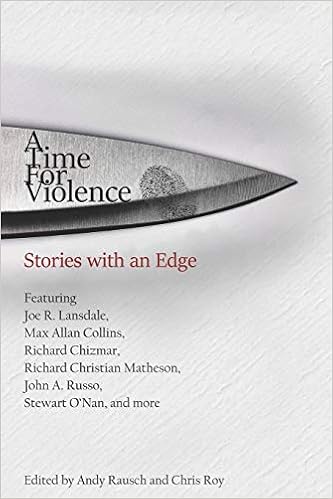
A Time For Violence: Stories With An Edge, An Anthology, Edited by Andy Rausch & Chris Roy - analysis and review


Disclaimer: Monsta Reader is affiliated with bookshop.org, and Waterstones. If you should make a purchase through any of the links in this blog, I might earn a small commission from the sellers, but this does not affect the cost to the consumer. And it does not influence the content of this blog.


In this anthology collection, the theme of violence connects each short story. Sometimes the story is a straightforward tale, a crime or suspense thriller short story, but sometimes the tales are more subtle, or even surreal. 

I was sent this anthology via Twitter, and asked to take a look. I made my way through it slowly and, I have to admit, sometimes unenthusiastically. However, this might have had something to do with my dislike of reading my books on a screen. But, I found myself fully engaged with some of the short stories in this collection, with scenes and characters still inside my head after I finished reading.

Though you might be put off by a collection of stories exploring the theme of violence, rest assured there is a diversity of tales within. This is not just a collection of explicit slashing and gore stories. You will find some well thought out tales within. Though, it might be worth warning you, there is slashing and gore in there too. 


The collection opens with Blood Brothers by Richard Chizmar, a fairly straightforward "story with a twist" about a pair of brothers, one a family man and the other on the wrong side of the law. And from there, the collection undulates, from one story to another, some better than others. Though, as I say, there is enough diversity in there that you can probably find a story that you will find enjoyable.

I found Santa At The Café by Joe R. Lansdale, and Ladies Day At The Olympia Car Wash by Andrew Nette to be fairly entertaining tales, but perhaps your tastes are different.

To be honest, this is an anthology that I dipped in and out of, and it wasn't a collection that I felt a need to read from beginning to end once I had started. There were some stories that I found myself wanting to end sooner than they did, and there were some that I found myself entertained by more than I had expected. I suppose that that's the nature of a collection featuring different authors.


You can find A Time For Violence: Stories With An Edge on Amazon.


Before you go, I would like to thank you for reading. And, I would like to ask that you consider supporting this blog with a coffee from ko-fi.com - the caffeine keeps my eyes open as I turn pages, and then tap away at my keyboard!

Though I am affiliated with a couple of booksellers, I have resisted adding space for adverts to this blog. I started writing here because I have a love for books and a desire to write; I want that to shine through, not to turn this into a space for selling products.

But, as I research, write, proofread, edit, rewrite . . . for these posts, and as I pursue my passion for writing, it would be unrealistic, and self destructive, if I didn't seek some remuneration for my efforts. So, I do ask, if you are able to do so, could you give a little support to keep these posts coming.

If you can, head on over to ko-fi.com, send a coffee, and I'll get back to the books! Thank you to every reader and supporter - you keep me writing!

Charles Dickens' Ghost Stories - analysis and review


Disclaimer: Monsta Reader is affiliated with bookshop.org and Waterstones, and if you should make a purchase through any of the links in this blog I might earn a small commission from the sellers,but this does not affect the cost to the consumer. It also does not influence the content of this blog.


During Dickens' lifetime (1812 - 1870), interest in the supernatural was high, and in the middle of the nineteenth century movements such as mesmerism (belief in a sort of invisible natural force that influence the physical world) and spiritualism (a belief that spirits of the dead exist and can be communicated with by the living) became incredibly popular. Therefore, it's probably to be expected that authors of the Victorian period would write an awful lot of good ghost stories.

From the hand of a spirit at the window, in Wuthering Heights by Emily Brontë, through to The Turn of the Screw by Henry James toward the end of the Victorian period, spirits of the dead haunting the living make many an appearance in Victorian novels and novellas.


In reality, Dickens was something of a sceptic, and had little interest in Spiritualism, except that he did attend a number of séances, but only to investigate and debunk the claims being made by peddlers of the "spirit business". However, he had just as much of a love for the ghost story as any other Victorian of his time.

In Dickens' most famous ghost story, A Christmas Carol, the spirits are a means of exploring those links between humanity that go deeper than the everyday and mundane. Through these figures of death, the author could explore what it is that makes life good and beautiful - worth living. In a precursor to A Christmas Carol, Dickens' short ghost story, The Goblins Who Stole a Sexton, also features supernatural beings that seek to interfere in the life of a man, at Christmas time, who carries hate inside of him. Clearly a theme that had been on Dickens' mind a while - The Goblins Who Stole a Sexton featured in The Pickwick Papers, along with three other short ghost stories, about seven years before the publication of A Christmas Carol.


As well as uplifting tales, like A Christmas Carol, Dickens was also quite capable of exploring the darker and more brutal side of humanity, and in his short story, The Ghost in the Bride's Chamber, he does so unflinchingly. In this story, a young woman endures a constant drip of cruelty until she is worn down by its power. 

There was a darkness in Dickens' mind, perhaps informed by his troubled early years, and he offered up some of the most haunting scenes ever committed to English literature. He was a wonderful humourist, but he could craft a gothic and haunting tale just as well.


The ghosts and spirits in his stories were a useful device for exploring the deeper meanings of life. Because death, life extinguished in this world, is the only forever in this life. And so, death can be a powerful inspiration, a reminder of what makes life rich and meaningful. But his ghosts could also be a manifestation, a warning, of how acts of abuse and cruelty can haunt and mark a life. His best ghost stories are a reminder to live life decently and well.


You can purchase a collection of Dickens' ghost stories here, a collection published by Pan Macmillan and which brings together all of Dickens' ghost stories.


Thank you for reading. You can support my writing with a coffee on ko-fi.com - the caffeine keeps me reading Victorian ghost stories and reviewing them for you here! Supporters keep me writing - thank you!

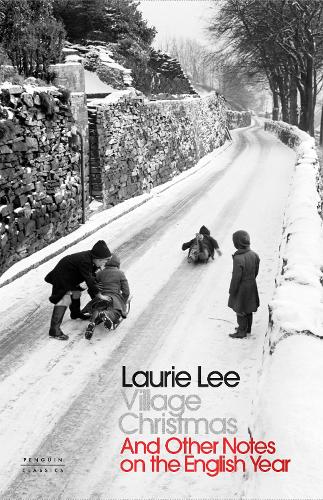
Village Christmas And Other Notes on the English Year by Laurie Lee analysis and review


Disclaimer: Monsta Reader is affiliated with bookshop.org and Waterstones, and if you should make a purchase through any of the links on this blog I may earn a small commission from the sellers. However, this does not impact the cost to the consumer, and it does not influence the content of this blog.


Christmas is only a memory now. We work our way towards it gradually, over the course of months, but then it dies back in only days. 

I purposefully selected more festive books from my shelves over Christmas. Of course, there was Dickens, but another book I selected from the shelves was a collection from an author that I hadn't read before - Village Christmas . . . by Laurie Lee. And, I fell in love.

Reading Laurie Lee for the first time, I felt the thrill readers feel when they discover something wonderful for themselves. And, I felt stupid for not having read any of his writing before. What he wrote on the page made almost absolute sense to me. 

That's the great thing about art of all kinds, despite the fact that it is there for many, it can feel wonderfully personal.


I write another blog, in which I focus on my passions for nature and wildlife, and in my blog posts over there I often wax lyrical about my love for wandering countryside paths. And there is some of that in this, this collection of brief essays by Laurie Lee, only it is done much better. Of course.

Village Christmas And Other Notes on the English Year takes us through the seasons of the English year. And it is mostly rural England, a rural England that isn't really there any more.


Throughout the book, the writing is infused with Lee's passion and care for his subject. Each brief essay is almost poetic; a collection of lyrical portraits.


After reading this book, I had a desperate need to read more of Lee's work, and so - because of course I had a Waterstone's gift card somewhere amongst the Christmas gifts - I ordered myself As I Walked Out One Midsummer Morning, and reminded myself that Cider With Rosie was still awaiting my attention, on my bookshelves.

Discovering Laurie Lee is to discover a great writer.  


My love for the English countryside supplemented my first experience of Lee's writing, and I very much enjoyed the way the book took the reader through the seasons of the year. This structure adds to the experience of the book. Countryside life has been entwined with the changing of the seasons, and the structure of the book, moving from one season to another, conveys this well.

For my money, this book does that wonderful combination of things - not only does it entertain, but it inspires also. It inspires - or reminds the reader of - love for our countryside; it inspires interest in old English tradition, life, and communities; it inspires the reader to consider how their own homes and pasts are a part of who they are.

Yes. I would recommend this book, and I fear that everything I have written above does absolutely no justice to how good I think this book is!


If you would like to purchase Village Christmas And Other Notes on the English Year by Laurie Lee, you can do so here.


Thank you for reading. You can support this blog with a coffee from ko-fi.com - the caffeine keeps me turning pages! Thank you to all supporters!


The Disaster Tourist by Yun Ko-eun, translated from Korean into English by Lizzie Buehler - analysis and review


Disclaimer: Monsta Reader is affiliated with bookshop.org and Waterstones and, if you should make a purchase through any of the links in this blog, I may earn a commission from the sellers, but this does not affect the cost to the consumer, and it does not influence the content of this blog.


The Disaster Tourist is something different. It is a thriller that takes in themes such as environmental activism, capitalism, dark tourism, being a woman in the world today, and the human reaction to disaster and tragedy.


Yona works for Jungle, a Seoul-based company that specialises in tours to disaster zones. It is Yona's job to take people's fascination and intrigue with disaster and turn it into something that can be sold back to them. Something quantifiable.

The whole novel is an exploration of how human beings manage and manipulate pain and tragedy, especially in the interests of making money. The company for which our protagonist works is itself sinister. Corruption and toxic elements of the company are mostly quietly accepted or ignored. And when Yona suffers sexual harassment at the hands of her boss, the matter is not explored and investigated, but manipulated to protect the interests of the company and the status quo. Yona herself manipulates the situation in her own mind, tries to convince herself that the event isn't what it was.


'I'm sorry, there's been a misunderstanding,' Yona replied nervously. 'Something unsavoury did happen to me, but I don't know if I'd call it sexual harassment. I think I misunderstood Mr Kim's intentions.'

- Chapter 1, Jungle, The Disaster Tourist, Yun Ko-eun


I think that this is a novel about how people manage their fears. Fears of death, pain, tragedy, and failure. Sometimes the characters in this book seek to manage their own fears and tragedies, in the interests of self preservation. Sometimes they seek to manage the fears and tragedies of others, so that they can exploit those disasters for themselves or to make money. But the managing and manipulating of these pains, rather than real attempts to heal, only lead to further pains.

This is a novel about many of the problems our world is facing today, and how we face them. Or not.


You can purchase The Disaster Tourist by Yun Ko-eun here.


Thank you for reading. You can support this blog with a coffee from ko-fi.com - the caffeine keeps me reading and reviewing! Thank you to all supporters!


This Be The Verse by Philip Larkin - an analysis and review


Disclaimer: this blog is affiliated with bookshop.org, who support local and independent bookshops in the UK, and if you should make a purchase through any of the links in this blog I might earn a commission from the sellers, but this will have no impact on the cost to the consumer and it does not influence the content of this blog.


My favourite parts of this lyric poem are its subject and its sing-song flow.


They fuck you up, your mum and dad.

  They may not mean to, but they do.

They fill you with the faults they had

  And add some extra, just for you.

This Be The Verse, first stanza, Philip Larkin


It isn't hard to see why this poem has been voted one of the UK's favourite poems. The verses flow almost as easily as a nursery rhyme. But there are dark and heavy themes within. In the second stanza, the poet tells us that human misery is handed along from parents to children. And, in the third and final stanza, that the only way out of this misery is "don't have any kids yourself."

Given the quite breezy flow of the verses, it can be easy to miss these weighty themes, and just get a little lost in enjoying the way the words fall from lips and tongue. The reader can get lost in the flow of the poem before they realise what exactly they are reading.


That simple and explicit first line is unforgettable, and often quoted.


Some consider Larkin a controversial and even unsavoury figure since his death in 1985. Others have argued that he was kind and charming, pointing towards accounts from people that knew him. Either way, his poetry is considered some of the best of the 20th Century. And there is no denying the wit and ability demonstrated in this poem, This Be The Verse. It is a poem I enjoy very much, and one that I return to often.


If you would like to purchase a copy of High Windows by Philip Larkin, which features the poem discussed above, you can do so here.


Thank you for reading. It is both quite easy and extremely difficult to write. If you would like to support this blog, you can buy the writer a coffee on ko-fi.com. All support is much appreciated.


The Age of Extremes : 1914 - 1991 by Eric Hobsbawm - a review and analysis


Disclaimer: if you should make a purchase through any of the links in this blog, I might earn a small commission from the sellers, but this does not impact the cost to the consumer, and it does not influence the content of this blog.


I would hesitate to call The Age of Extremes an overview of world events and human progress in what the author calls the "short twentieth century", because the word 'overview' might give the impression that this book touches on topics only in brief. But, if you're a history buff you will probably know that Hobsbawm was considered a great historian, a historian who knew and wrote about his subject well.

This book takes in world history between the years of 1914 - 1991 (from the start of World War 1 until the collapse of the Soviet bloc), and touches on political, cultural, and technological changes in that time, amongst other societal shifts and changes.


This book completes a quartet of books by Hobsbawm. The preceding three were The Age of Revolution: 1789 - 1848; The Age of Capital: 1848 - 1875; The Age of Empire: 1875 - 1914. This trilogy took in the period of history that Hobsbawm called the "long nineteenth century". 


In the preface to The Age of Extremes, Hobsbawm tells readers that he had avoided writing about the twentieth century:


My own lifetime coincides with most of the period with which this book deals, and for most of it, from early teen-age to the present, I have been conscious of public affairs, that is to say I have accumulated views and prejudices about it as a contemporary rather than a scholar.

Eric Hobsbawm


Indeed, the author, a staunch Marxist, did suffer some criticism for his writings on this period because it was considered that his political views coloured his writing here. A number of reviews praised the book when it was originally published, but also suggested that Hobsbawm had been too harsh when writing about capitalism, and had allowed his communist convictions to influence too much of the book.


Still, considering that the book is now nearly two years shy of being thirty years old, it is quite unsettling to read certain passages:

We do not know where we are going. We only know that history has brought us to this point and - if readers share the argument of this book - why. However, one thing is plain. If humanity is to have a recognizable future, it cannot be by prolonging the past or present. If we try to build the third millenium on that basis, we shall fail.

The Age of Extremes, Eric Hobsbawm


In this mess of an age, when political leaders have been elected off the back of  "making great again" and "taking back . . . ", it does feel as though that that - "prolonging the past or present" - is what many people want. And, in an age when it feels ridiculously easy to spread misinformation, when people can easily dismiss facts and science for articles and videos on their social media feeds (even if they are demonstrably false - the algorithms only show us what keeps us glued to our screens), I only know one thing for sure - we might be better off if we read more books! And, at least every now and then, it will be a great benefit to us if we read books like this, if only to remind ourselves of the "record of the crimes and follies of mankind", because then, maybe we'd be a little less likely to repeat some of our greatest mistakes.


You can purchase a copy of The Age of Extremes : 1914 - 1991 by Eric Hobsbawm here.


Thank you for reading. You can support my writing with a coffee from ko-fi.com - the caffeine keeps my eyes open when I should be reading and my fingers moving when they should be typing! Thank you to all supporters!


The Fear-Fighter Manual: Lessons From a Professional Troublemaker by Luvvie Ajayi Jones - an analysis and review


Disclaimer: should you make a purchase through any of the links in this blog, I may earn a small commission from the sellers, but that does not affect the cost to the consumer, and it does not influence the content of this blog.


The central theme of this book is a fairly simple one, and at the same time a fairly difficult one; how to overcome fear so that we might reach greater levels of success in our lives. 

Luvvie Ajayi Jones does not suggest that we should be fearless, for fear can be useful and informative. It can keep us safe and prevent us from making poor decisions. However, some of the things that we fear have been bred in us not for our own good, but so that we might keep our voices small and quiet. So that we won't rock the boat and point out the absurdities of our world. Some of that fear is there because others felt uncomfortable with our differences of opinion, thought, feeling, appearance, circumstances . . .

Those fears, the author suggests, are fears that we ought to address and overcome because they serve no one, and only make us small where we could be grand.


These themes of overcoming fear, wanting for something more grand, "living our best lives" are obviously not going anywhere any time soon. Self help books are doing good business. They probably always will; there's always been troubles and inequality in the world and - sorry, just call me Mr. Pessimistic - I expect there always will be.

Drawing on research, personal experiences, and her grandmother's life, Luvvie Ajayi Jones has written a book that sets out to lift the reader out of their fears, and consider what they might be.


Luvvie Ajayi Jones began blogging in the early 2000's, and has been writing ever since. She is also a highly sought after public speaker. And, as someone who blogs (and has nowhere near the audience that Luvvie has) and who also cannot stand before a group of more than about eight people without wanting to disappear into the floor, I can tell you that that sort of work takes perseverance and guts. So, the author seems to be qualified to cover the topics of tackling fears and realising goals for this, her second book.


I like how the book is written in three parts (Be, Say, Do), covering the different ways in which we can address our fears and learn to overcome them, and that the author writes in her own warm and honest voice. In it's best moments, this book reads like the words of an honest and caring friend. I don't know that this book is for everyone, but there are some interesting and worthy ideas between the pages. If you're looking for a read that might just point you towards a bolder and brighter you, whilst also drawing a smile or two, you might love The Fear-Fighter Manual by Luvvie Ajayi Jones.


You can buy The Fear-Fighter Manual: Lessons From a Professional Troublemaker by Luvvie Ajayi Jones here


Thank you for reading! If you enjoyed this piece, you can buy me a coffee on ko-fi.com - the caffeine keeps me reading and reviewing! Thank you to all supporters!

Travelling to Infinity by Jane Hawking - a review and analysis


Disclaimer: should you make a purchase through the links in this blog, I may earn a small commission from the sellers, but that does not impact the cost to the consumer and it does not influence the content of this blog.


In this candid memoir, Jane Hawking, the first wife of Stephen Hawking, tells the story of their marriage. It is a love story. But this love story is a true story, not a fairytale. It includes all the tests and trials of a marriage as well as the beauty and joy. 

As Stephen Hawking, the theoretical physicist and cosmologist, and his wife were coming to grips with the fame his work regarding black holes had drawn, they were also navigating the motor-neurone disease that was gradually and progressively paralysing his body. And, in Travelling to Infinity, Jane Hawking writes with honesty about the challenges they faced, navigating the worlds of fame and degenerative illness, all whilst trying to care for and support a growing family.

In the postlude section of the book, Jane Hawking writes that her initial hesitancy to write about her life with Stephen gave way because "my life was public property anyway as a result of Stephen's fame, and it would only be a matter of time before biographers started to investigate the personal story behind his genius and his survival: that would inevitably include me." And the author writes with honesty but with care and respect for her former husband. This is no 'warts and all' biography for the base celebrity gossip crowd; this is a considered and thoughtful book on the love shared in a family, and in a marriage.

As well as exploring family life and marital love, this book is also a consideration of what it takes to live with a degenerative illness, and the strength it takes to be a carer. This is a book that is worth the reading, even if you've no interest in physics or cosmology, because this is a book about neither of those things. This is a book about being human.

You can buy a copy of Travelling to Infinity by Jane Hawking here, from bookshop.org, who support independent bookshops!


Thank you for reading, if you enjoyed this piece, you can buy me a coffee on ko-fi - it fuels the writing and the reading! Thank you again!

The Road by Cormac McCarthy - a review and analysis


Disclaimer: should you make a purchase through any of the links in this blog, Monsta Reader may earn a commission from the sellers. This does not impact upon the cost to you as the consumer and it does not influence the content of this blog.


There are a number of people that piss me off.

Racists. Homophobes. People who litter. Especially people who litter in our countryside. People who don't clean their bird feeders. People with a half-arsed approach to animal care in general. People who never consider that they might be the ones who are wrong . . .

And me. I really piss myself off sometimes.

As a remedy to these curmudgeonly feelings, I either immerse myself in the pages of a good book or I take off for a long walk along a public footpath, preferably in the countryside. In Cormac McCarthy's novel, The Road, I was able to follow a father and son on their own long and solitary walk. Theirs fraught with more danger than any I have ever known.

In this novel, set in a post-apocalyptic world, the central theme explored is that of the bond between father and son. Indeed, the novel was inspired by a trip that the author took with his own son to Mexico. And he dedicates the novel to this son.


Being set in a post-apocalyptic world amplifies the fears and concerns that a parent might have for their child - the sort of world that is being passed onto them; how they might survive once they are left without the guiding hand of the parent; the parent's role as protector. McCarthy explores all of these with consideration and tenderness.

The pair, the father and son, must keep moving. In the world that they live in, there are those that would do them harm, and resources must be sought out. Food and clean water are no longer something that can be taken for granted, for example. They must be hunted out and rationed.

I enjoyed the author's style of writing, but this is not an easy novel to read, filled with haunting moments as it is. The father and young son of the book having to traipse along the road they are on, facing the adversities they have to face, really shone a light on the strength and purity of that bond that can exist between a parent and their child. As I say, the situation of the novel throws everything at this pair, challenges that could at any moment tear them apart, but they endure and take strength from their relationship.

Though it is not explicitly mentioned in the book, some have drawn the conclusion that the apocalypse of the story was an environmental crisis. And the lack of animal and plant life, and the sparseness of human life, certainly points towards a mass extinction event. Whereas mentions of unsettled weather in the book points towards climate crisis. However, the author does not explicitly tell the reader what has caused the dead world in which the characters live.

Reading books like this, pondering the story, can really force the reader to consider the circumstances of their own life. All those things that have us running around, concerned and convinced of their importance and urgency, are they really all that important? If you were to lose everything, if you were made to fight, what would you fight for? What is really important? And what can you let go of? Maybe it isn't worth letting all those people piss you off for a start . . .


To purchase a copy of The Road by Cormac McCarthy, follow the link here.


Thank you for reading. If you made it this far, you can support me by buying me a coffee on ko-fi - it keeps me caffeinated and writing!

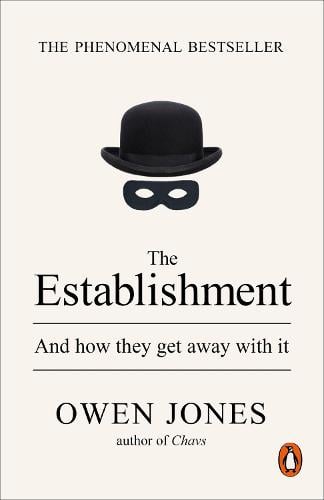
The Establishment : And how they get away with it by Owen Jones - a book review and analysis


Disclaimer: should you make any purchases through links in this blog, Monsta Reader may earn a commission from the sellers, but that has no impact on the cost to you as consumer, and it does not influence the content of this blog.


When I take to Twitter there's an almost fifty-fifty chance that I will find the name of Owen Jones trending. More likely than not it will be because he is being called out as a misogynist and a liar by people running right-wing and conservative accounts. However, the only reasons I found for anyone calling him a misogynist is because he advocates for trans rights and trans activists, and because in the past he has mentioned his desire, as a gay man, to have children with a surrogate mother. That's it. And, as for being a liar, I couldn't see that anyone backed up those claims, and they often read more as, "He said something I don't like, if I call him a liar though that sounds better!"

If anything, from reading The Establishment, it seems as though it is the rich white Oxbridge boys living in The City that Jones has his critical eye on (though he his self aware and transparent enough to admit that he is one of those Oxbridge white boys), and not without good reason it seems. Here Jones makes a good case for how our political leaders, big corporation, and our media has been letting us all down, and is interested in serving only itself - The Establishment. His conclusion is that corporate interests are taking priority over the interests of the citizenry and national interest. The real bummer? This book was published about six years ago and, uh, well, have you turned on the news recently? Checked out Twitter? Yeah . . .

However, Jones suggests a solution; a democratic revolution. This consists, essentially, of those of us that would rather see the state working in the interests of its people, not giving up, to keep fighting the good fight. Because, without resistance, the establishment has nothing to stop it sliding towards outright corruption and exploitation.

It can be quite a hard slog, this book, and it probably ought to be, to read about all the ways in which the chips are stacked against you. One of the saddest paragraphs I read in this book concerned a local-council officer being surprised at the lack of objection from low-paid workers and unemployed people at cuts to their council-tax benefit; that the poorer in society were not angry at such treatment, whilst wealthy tax dodgers get away free, but instead resigned to quiet malaise and struggle is what happens when citizens get worn down. But, Jones says, it's exactly in times like these that the fight is very much worth fighting.

This is a book to take your time over, to take note from. I read it over the course of days, and I took notes. If you're reading this a few years after publication, as I have, and you're not up to speed on the political landscape, you might want to take a break now and then and check up on what's going on out there (don't get your hopes up . . .).

When I have finished writing up this post, I will share it through my platforms on social media and maybe I will check to see whether or not Mr. Jones is trending today. If he isn't, I can be pretty certain that I will find outriders, media figures/outlets, politicians, and corporate figures there, clogging up the timeline. Indeed, the platforms themselves (Facebook, Instagram, Twitter, etc.) are really only using us to keep the money flowing. It might do us well to remember that.

Would I recommend this book? Yes, I would.

It shouldn't really be such a radical thing to suggest that society ought to be ordered in such a way that it serves the people rather than corporate interests and that, when that society finds itself demonising the lowest paid and most vulnerable members whilst it bails out the richest and writes of what's owed by the tax dodging wealthy, it might be time for a little self analysis and restructuring. But, it seems, that's the world we are living in now. After reading this book, however you feel about it, the question worth asking might be, what do you want to do about it?

If you want to purchase a copy of The Establishment : And how they get away with it by Owen Jones, follow this link.

Please, consider following/supporting me over at ko-fi where I regularly update about my blogging and other of my writerly endeavours. All support is gratefully received and very much appreciated; it keeps me writing after all! Thank you!


1. Introductory Lectures on Psychoanalysis by Sigmund Freud - a book review and analysis


Disclaimer: should you make a purchase through any of the links in this blog, I may earn a commission from the sellers, but that has no impact on the cost to you as the consumer, nor does it influence the content of this blog.

If you are looking for an introduction to psychoanalysis and Freud, you can do worse than picking up his Introductory Lectures on Psychoanalysis. I mean, it's the man himself, in his own words, covering the topic.

Within this volume, the reader will find twenty-eight lectures spread into three parts. The first part covers slips of the tongue, the second part covers dreams, and the third part covers neuroses. Almost everything that Freud is well known for - has become a bit of a pop figure for really - is within these pages, Freudian slips; dream interpretation; and, sex and the libido!

And, I think those were my favourite parts of the book. Those parts where a little flesh was added to the bones of my knowledge regarding Freud's work.

If you are looking for a truly in-depth exploration of Freud's work and theories though, you might wish to look else where. Freud himself said that this book was for the laymen, "for the multitude". Indeed, Freud's work here is written in an almost conversational manner; he even asks questions that he anticipates the reader (or listener) might ask of this lecturer. 

Reading this book was a bit of a slow burn for me. It is an interesting read, but it was the sort of material I need a break from for a while before returning to for another go. Having said that, when I did read, I read a number of chapters at a go before I needed a break. 

This is the first book I have read by Freud. Would I read another? Honest answer, I don't know. I might, but I'm not itching to add one to my ever growing "to be read" pile. Perhaps I am just not a big enough fan of Freud and psychoanalysis. I am generally curious, but not greatly so.

If you would like to purchase your own copy of Introductory Lectures on Psychoanalysis by Sigmund Freud, follow the link here


If you enjoyed this piece, or any other post on this blog, please follow and support me on ko-fi where I often update about what's going on here, there and everywhere in my blogging/writerly world! And, thank you for reading!

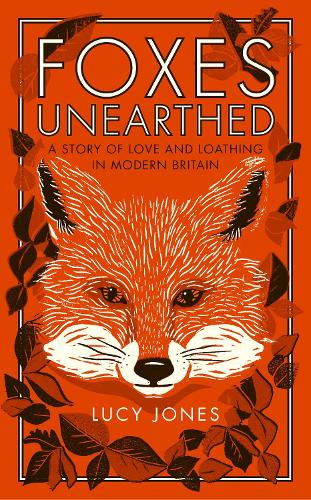
Foxes Unearthed: A Story of Love and Loathing in Modern Britain by Lucy Jones - a book review


Disclaimer: should you make a purchase through any of the links in this blog, I may earn a commission from the sellers, but that has no impact on the cost to you as the consumer, and it does not influence the content of this blog.

If I can't be found nose deep in a book, it might be because my attention has been drawn by something wild.

I love to go walking in the countryside. And, when I am out there, trying to ignore the fact I am more out of breath than I would like, catching the sight or sound of something wild still has the power to make me stop and gasp. And, after that gasp, the trying as hard as possible to remain still, for fear that any move or sound I make might disturb the wonder I have stumbled upon.

The fox is an animal I have only caught glimpses of really, and I am incredibly envious of those who are able to report having had a "moment" with this feline-like canine; a moment in which the teller comes face to face with Vulpes vulpes and they look into each other's eyes for what seems an age. For me, alas, the fox is usually, when I have been fortunate enough to see one, a flash of red and white fur disappearing into green. 

But, in this book, Lucy Jones brings the fox into sharper focus. In Foxes Unearthed she explores Britain's relationship with one of the largest predators it has left, and as she does so she walks with those who love the fox, as well as those who see the animal as vermin. And, in this the author writes without proselytising, instead allowing the truth of the subject to speak for itself.

Lucy Jones does bring the fox into sharper focus, and she does so by shining a light on the falsehoods and absurdities with which we have adorned the animal over centuries. And, we get to meet the fox face to face, and we come away knowing the red fox better for having read this book.


One hopes that this book has found its way into the hands of someone that really needs to know this animal better. Posts on social media tend to suggest their are still plenty out there ready to believe in the bad press.

Lucy Jones writes beautifully and honestly on the subject, and now that I have finished this book I really need to get my hands on Losing Eden, the author's latest offering!

If you would like a copy of Foxes Unearthed by Lucy Jones, you can purchase the book here.

You can purchase Losing Eden: Why Our Minds Need the Wild by Lucy Jones here.


Thank you for reading. If you enjoyed this post, please consider supporting me over on ko-fi so that I can keep bringing you content just like this!

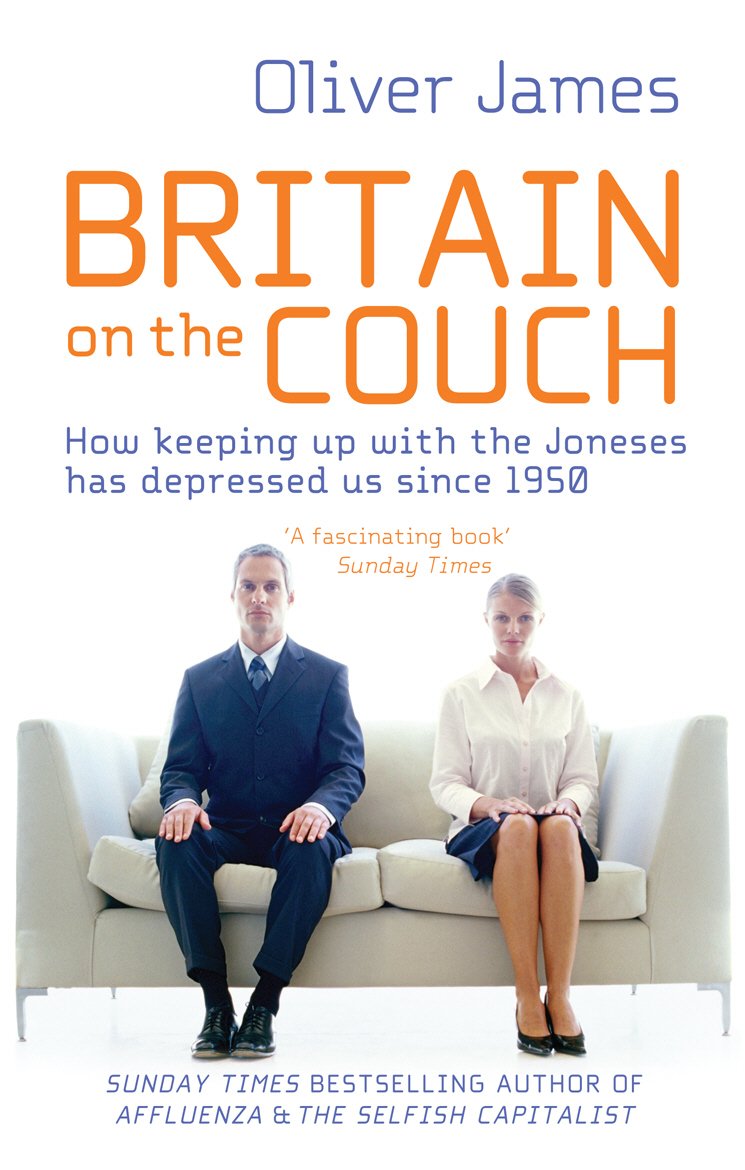
Britain on the Couch: A Treatment for the Low-Serotonin Society by Oliver James - a book review and analysis


Disclaimer: should you make purchases through any of the links in this blog, Monsta Reader may earn a commission from the sellers, but that has no impact on the cost to you as consumer, nor does it influence the content of this blog.


The central hypothesis here is that Britain has seen huge rises in depression and other mental illnesses since the 1950's (the book was originally published in 1997). Indeed, the author posits the idea that low serotonin, and increased mental unrest generally, might be a very natural response to the world that we have built up around us (politics, media, advertising, etc.), and, since we cannot hope to revert back to the ways pre-Industrial Revolution, James advocates the use of therapies and antidepressants, in particular selective serotonin reuptake inhibitors (SSRI's), as a means to functioning as well and as healthily as we can in the world of today.


So, serotonin is not only key to mental wellbeing - it also plays a key part in digestion for example - but it is the key hormone in stabilising mood and feelings of wellbeing. And so, SSRI's, which increase levels of serotonin in the individual, are often prescribed to people suffering from depression, especially "persistent or severe cases", according to the NHS website. As an aside, remember at the top of this paragraph when I mentioned how serotonin also plays a part in regulating digestion? Well, that's why side effects of taking SSRI's can include things like feeling or being sick, indigestion, and diarrhoea or constipation. Now you know. Fun!


To support and explain his hypothesis James explores sociological concerns such as how we compare ourselves with others, poor emotional bonds between people, and gender rancour. And, ooh, that last one. I don't know . . .

I have had my own adventures with a particular SSRI, and I can only tell you that, maybe because of personal experience, the way in which James discusses men suffering depression kind of rankles a little. He mentions often that women are twice as likely to report being depressed than are men, but he doesn't really explore why that might be, or why men might be more inclined to self medicate their depression with alcohol, as he suggests they are, etc. 

However, as I say, it probably rankles because of personal experience. As a guy who has been on and off antidepressants, a guy who knows the statistics (men have consistently made up about three-quarters of all suicides since the mid-nineties - just before this book was published; and suicide has been the single biggest killer of young men for years), I was a bit disappointed that the book explored so much men who commit acts of violence, and not much at all into how men seem to be vulnerable.

By the way, that's a problem that hasn't gone away. Since this book was published in 1997, it is still true that men dying from suicide accounts for around three-quarters of all deaths from suicide (Guardian article; Male suicide rate hits two-decade high); it's been true for decades now.


I feel I might be going off on a bit of a tangent. Not a wholly unrelated tangent, but a tangent nonetheless . . .


This book raises some interesting points. For example, how advertising and media has influenced how we form ideas and concepts, the way in which we compare ourselves to others, and how that has impacted upon our mental wellbeing. The author offers us examples of studies to support these ideas, and to demonstrate how these images in media and advertising are detrimental to our own self-image and how we view and value others. And, as I read those segments, I wondered a great deal about how the author would approach social media if this book were published today (at this point, though this is a book blog, I highly recommend watching the documentary The Social Dilemma). I don't doubt the constant barrage of images of pretty people - made up, exercised, dieted, filtered, and even surgically enhanced to fit the ideal of our current social tastes - influence how we look at ourselves and others . . .

Besides the media and images we are surrounded by, the author explores how schooling, work, pressures imposed upon us by ourselves and others, and relationships have impacted our mental wellbeing, or the lack thereof. How we value the lives we live.

Yeah, it can be a bit of a downer, this book; after all, it is a book that's suggesting we are progressing towards more and more ill mental health, so . . .

I'm not sure how I feel about this book. I can tell you, it made me consider getting back on the old SSRI's. Though, I don't know how I feel about those either; I can kind of disappear on those things. Maybe that's why I don't know how to feel about the book! I am kind of resistant to taking those pills, so maybe I am just a little resistant to a book that advocates the use of them. It could be that. And, just as SSRI's can work really well for people, maybe this book will work better for you than it did for me.

If you need to talk . . .

If you are in the UK and you need to talk, you can find an NHS urgent mental health helpline local to you on the NHS website (England only) - NHS website mental health helplines - or, you can:

  • Call 116 123 to talk to the Samaritans
  • Text "SHOUT" 85258 to contact the Shout Crisis Text Line
  • If you're under 19, you can call Childline on 0800 1111 (this number will not appear on the phone bill)
  • Mind's website offers some methods you can use to keep calm if you are feeling overwhelmed - mind.org.uk  


If you would like to read my write up on another of James' books, you can do so here, and I hope to see you again soon. And, if you enjoyed this piece, or any of the others, please consider following/supporting me over on Ko-fi; I appreciate all support!


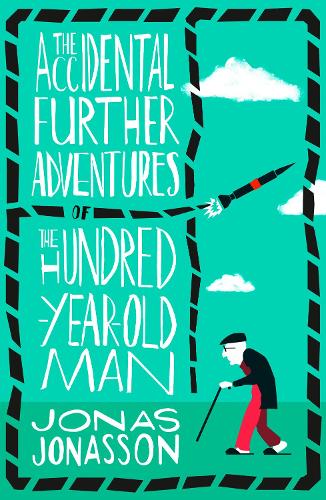
The Accidental Further Adventures of the Hundred Year Old Man by Jonas Jonasson - book review and analysis


Disclaimer: should you make purchases through any of the links in this blog, Monsta Reader may earn a commission from the sellers, but this has no impact on the cost to you as consumer, nor does it influence the content of this blog.

Allan Karlsson is back! And, he is just as likely as ever, despite his advancing years, to find himself in all sorts of scrapes!

Unlike the first novel (which I wrote about here), we don't traverse the ever changing sociopolitical landscape of countries around the world throughout the last century, but instead we are very much immersed in that landscape of today. At times, the novel reads as quite surreal, and you might find yourself thinking it absurd comedy. But, then you recall some of the odd news stories, and equally as odd political leaders, we've seen in recent history, and you might end up thinking, "Well, jeez, maybe this ain't all that absurd!"

Just as we saw Karlsson meet prominent figures of the twentieth century in the last novel, he becomes familiar with political figures of the modern age here; Donald Trump, Angela Merkel, and Putin all make an appearance. And, just as in the first novel, he doesn't always rub them the right way. He has a way of doing that sometimes.

Alan has lived through one hundred years of watching the world shift and change; he has seen people kill and be killed for this and that ideology. And, somewhere along the way, he came to the conclusion that whatever will be will be. This attitude of acceptance is a hallmark of the character's personality, and probably why he is able to travel and see what he has seen without having to curl up in a ball in a corner somewhere. Because, though the author tells us an absurd story, it hangs on a framework the real world, and it shines a light on the craziness of this world we live in!


As I read this book, a question occurred to me; why does Allan like to drink so much? I mean, he seems to be laid back and accepting of the world, that it will do harm and suffering. He seems to accept that he will have to suffer loss, discomfort, and hurt, and he seems to accept these things with an almost Zen like calmness. However, he does love a drink, and when he imbibes he can drink an awful lot. It doesn't seem to tally.

Then, I wondered, perhaps the desire for that cosy buffer between oneself and a crazy world is just natural. A perfectly sane response to an insane world; the temporary serotonin increase, the veil between oneself and the cruelty. An idea that I might explore further in a future post. Not a wholly optimistic outlook, but there it is.


In this novel, Allan discovers the internet, and throughout the book he carries with him a black tablet; he is forever regaling anyone who will listen - and, even if they won't he tries - with the latest news stories that pop up on his screen. Even when the group he is travelling with has other concerns he still just wants to read off the news. Just as many of us do. He eventually even joins Twitter. And, what happens? This one hundred year old man who has seen and accepted so much begins to worry and feel concern. Perhaps he should, right? Or, perhaps, the internet, and social media in particular, is causing a whole new host of problems rather than doing much to alleviate the old ones?

This is a book full of absurdity, just like the last one, but it's also a book, just like the last one, that can prompt serious questions if you look beyond the absurdity. Brilliant satire!

If you would like to purchase a copy of The Further Adventures of the Hundred Year Old Man by Jonas Jonasson, you can do so here, and I very much recommend that you do!


Thank you for reading, if you enjoyed this piece, please consider following/supporting me over at Ko-fi where I regularly update about my rather bookish blog, and other of my writerly endeavours. All support is gratefully received and very much appreciated! It means that I can keep writing after all!

Childe Harold's Pilgrimage (in particular, Cantos 3 & 4) by Lord Byron - a review and analysis


Disclaimer: should you make any purchases through any of the links in this blog, Monsta Reader may earn a commission from the sellers, but that has no impact on the cost to you as the consumer, nor does it influence the content of this blog.


Childe Harold is the Byronic hero; a lone traveller, self-exiled and world weary, pondering life and nature. Indeed, this long narrative poem, described as a romaunt (archaic; meaning a romantic tale or poem), takes in all of these themes. The protagonist, Childe (an archaic term, meaning a young man who aspired to knightly honours) Harold, is disillusioned with shallow pleasures and seeks distraction and something more profiund in foreign travels. And so, we follow his wanderings as he contemplates life, war, society, nature, and more.

There is a pleasure in the pathless woods,
There is a rapture on the lonely shore,
There is a society, where none intrudes,
By the deep Sea, and music in its roar :
I love not Man the less, but Nature more,
From these our interviews, in which I steal
From all I may be, or have been before,
To mingle with the Universe, and feel
What I can ne'er express, yet cannot all conceal.

There are parts of the poem, and the character of Harold, that are thought to be autobiographical. In early drafts, the character's name was written as Childe Burun, an early form of Byron's family name; it could be said that Childe Harold is Byron himself, only exaggerated. He could definitely have drawn on his own travels to inform the narrative of the poem. 

Whatever the origins, this is the poem that made Byron famous, after the first two cantos were published. It also, as already mentioned, gave the world the Byronic hero; an often dark and brooding character, most likely misunderstood by others, who questions, or maybe even has downright distaste for, social norms. Examples might include Heathcliff from Emily Brontë's Wuthering Heights, right through to Batman and James Bond. Byron himself - a man born with a deformity in his right foot, who starved himself and had a troubled relationship with his weight, not to mention the relationship he had with his parents - felt not a little like an outsider himself. "Mad, bad and dangerous to know", maybe? Maybe not. There are signs of sensitivity there; he cared much for animals, and nursed his beloved dog, Boatswain, when the Newfoundland contracted rabies and, when the poor animal eventually died, he commissioned an impressive monument to his canine friend.


I am such a strange mélange of good and evil that it would be difficult to describe me.

- George Gordon Byron, 6th Baron Byron


You can purchase a copy of Childe Harold's Pilgrimage by Byron here.

If you'd prefer, you can purchase a copy of Byron's selected poems here.


Thank you for reading. If you enjoyed this post, please consider following/supporting me over at Ko-fi, so that I can afford to eat as well as write. After losing work last year, I have been concentrating on writing and trying to start up my own business, which is incredibly enriching, just not for my bank account! All support is gratefully received and incredibly appreciated!