Disclaimer: should you make purchases through any of the links in this blog, Monsta Reader may earn a commission from the sellers, but that has no impact on the cost to you as consumer, nor does it influence the content of this blog.
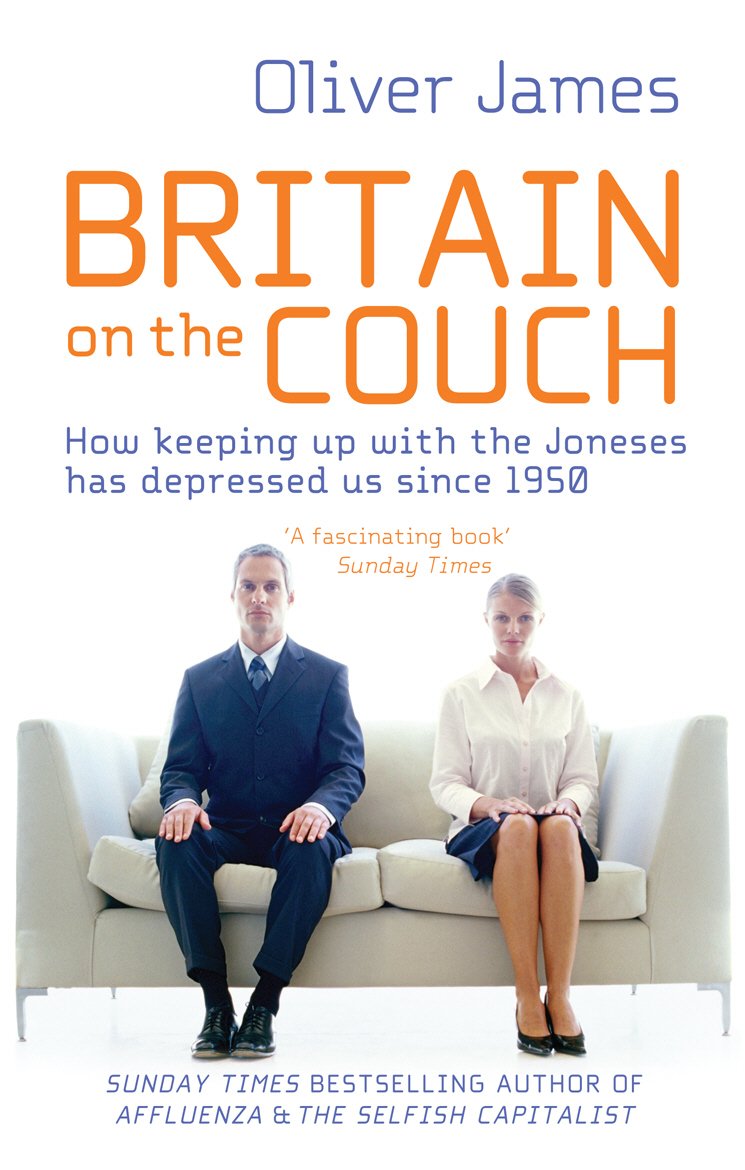
The central hypothesis here is that Britain has seen huge rises in depression and other mental illnesses since the 1950's (the book was originally published in 1997). Indeed, the author posits the idea that low serotonin, and increased mental unrest generally, might be a very natural response to the world that we have built up around us (politics, media, advertising, etc.), and, since we cannot hope to revert back to the ways pre-Industrial Revolution, James advocates the use of therapies and antidepressants, in particular selective serotonin reuptake inhibitors (SSRI's), as a means to functioning as well and as healthily as we can in the world of today.
So, serotonin is not only key to mental wellbeing - it also plays a key part in digestion for example - but it is the key hormone in stabilising mood and feelings of wellbeing. And so, SSRI's, which increase levels of serotonin in the individual, are often prescribed to people suffering from depression, especially "persistent or severe cases", according to the NHS website. As an aside, remember at the top of this paragraph when I mentioned how serotonin also plays a part in regulating digestion? Well, that's why side effects of taking SSRI's can include things like feeling or being sick, indigestion, and diarrhoea or constipation. Now you know. Fun!
To support and explain his hypothesis James explores sociological concerns such as how we compare ourselves with others, poor emotional bonds between people, and gender rancour. And, ooh, that last one. I don't know . . .
I have had my own adventures with a particular SSRI, and I can only tell you that, maybe because of personal experience, the way in which James discusses men suffering depression kind of rankles a little. He mentions often that women are twice as likely to report being depressed than are men, but he doesn't really explore why that might be, or why men might be more inclined to self medicate their depression with alcohol, as he suggests they are, etc.
However, as I say, it probably rankles because of personal experience. As a guy who has been on and off antidepressants, a guy who knows the statistics (men have consistently made up about three-quarters of all suicides since the mid-nineties - just before this book was published; and suicide has been the single biggest killer of young men for years), I was a bit disappointed that the book explored so much men who commit acts of violence, and not much at all into how men seem to be vulnerable.
By the way, that's a problem that hasn't gone away. Since this book was published in 1997, it is still true that men dying from suicide accounts for around three-quarters of all deaths from suicide (Guardian article; Male suicide rate hits two-decade high); it's been true for decades now.
I feel I might be going off on a bit of a tangent. Not a wholly unrelated tangent, but a tangent nonetheless . . .
This book raises some interesting points. For example, how advertising and media has influenced how we form ideas and concepts, the way in which we compare ourselves to others, and how that has impacted upon our mental wellbeing. The author offers us examples of studies to support these ideas, and to demonstrate how these images in media and advertising are detrimental to our own self-image and how we view and value others. And, as I read those segments, I wondered a great deal about how the author would approach social media if this book were published today (at this point, though this is a book blog, I highly recommend watching the documentary The Social Dilemma). I don't doubt the constant barrage of images of pretty people - made up, exercised, dieted, filtered, and even surgically enhanced to fit the ideal of our current social tastes - influence how we look at ourselves and others . . .
Besides the media and images we are surrounded by, the author explores how schooling, work, pressures imposed upon us by ourselves and others, and relationships have impacted our mental wellbeing, or the lack thereof. How we value the lives we live.
Yeah, it can be a bit of a downer, this book; after all, it is a book that's suggesting we are progressing towards more and more ill mental health, so . . .
I'm not sure how I feel about this book. I can tell you, it made me consider getting back on the old SSRI's. Though, I don't know how I feel about those either; I can kind of disappear on those things. Maybe that's why I don't know how to feel about the book! I am kind of resistant to taking those pills, so maybe I am just a little resistant to a book that advocates the use of them. It could be that. And, just as SSRI's can work really well for people, maybe this book will work better for you than it did for me.
If you need to talk . . .
- Call 116 123 to talk to the Samaritans
- Text "SHOUT" 85258 to contact the Shout Crisis Text Line
- If you're under 19, you can call Childline on 0800 1111 (this number will not appear on the phone bill)
- Mind's website offers some methods you can use to keep calm if you are feeling overwhelmed - mind.org.uk
If you would like to read my write up on another of James' books, you can do so here, and I hope to see you again soon. And, if you enjoyed this piece, or any of the others, please consider following/supporting me over on Ko-fi; I appreciate all support!
