Ko-fi

How our beloved authors get paid


A recent piece in The Telegraph (16/05/2021) tells us that Trainspotting by Irvine Welsh is the most stolen book from UK bookshops, and apparently Welsh is fine with that because he still gets paid!

Our authors are earning less they did just nine or ten years ago. Far less. From writing alone, a writer would be living far below the minimum income standard, they'd probably take home just over £800 a month, which is why the vast majority of writers are never solely writers. 

So, after reading what Irvine Welsh had to say about how he feels about his books being stolen, and how he still gets paid anyway, I thought I would take a brief look at how our beloved authors get paid.


When books get stolen

We'll start here since it is what inspired this piece.

Well, according to Irvine Welsh, when his books are stolen he will still get paid royalties. So, he thinks it is brilliant!

We are told that when a book is stolen from a shop, the shop has to cover the cost of the loss to the publisher. The publisher will sell the books to retailers and distributors at a discount, often on a sale or return basis, and if the retail outlets have any losses they have to cover that with the publisher. From this, the author will earn a percentage. Which will be determined by their contract.


Sales

This is probably the most obvious one.

An author writes a book, a writer gets that book published, the author gets paid. Simples. Right?

Uh . . .

Well, firstly, it depends on how they have published their work; is it through a traditional publisher, or have they self published? If they have a publisher, then what they earn from sales will be determined by the contract they have been able to negotiate with that publisher. If they have self-published, what they earn will be determined by the terms set out by the retailer and distributors through whom they sell their work.

When you self publish it is a tad more straightforward than when you sell through a publisher. And, if you want to learn more about how authors get paid from their sales (it's a little more complicated than a brief overview like this allows space for, I'm afraid), you might want to a look at this page here from The Society of Authors - it goes into a little more detail about percentages and different ways in which authors can get paid from sales.

As consumers, the main take away from this might be that the more we pay for our books, from retailers and distributors, the more the author receives in turn. And, when authors really are earning dismal amounts for their work in most cases, that really is something to bear in mind.


Talks

There are, of course, literary festivals. But, there are also schools, where authors of children's books might go to read, speak, and give the children some fun activities to do which relate to the author's books.

There are universities, perhaps where the academic writer might speak, or give a lecture, to the students.

Authors who specialise in certain areas, on certain topics, might be able to find venues appropriate to that field. For example, if you have written extensively on the business world, there might very well be companies in need of your experience and insight.

And, not only can you get paid for these speaking gigs, they are an opportunity to sell your book!

Though, as someone who enjoys talking to an audience about as much as swimming in raw sewage, I can understand that this one is not for everyone. However, there are writers who earn more from speaking engagements than from sales!


Library lending

The Public Lending Right Act 1979 gave British authors a legal right to receive remuneration for the free loan of their books by public libraries. This is a right that British authors campaigned for for thirty years!

You can follow the PLR here, on Twitter to find out more and stay informed.

You can also learn more from The Society of Authors here, along with how they are continuing to lobby for PLR.

I am unsure whether or not there are similar schemes in other countries, but the brief research that I did for this article suggests that it is not something one might find in the US. Though, as I say, my research was brief and I may be wrong.

If you are in the UK, or another country with a similar scheme, this seems to be just one more reason to make use of those fantastic places we call libraries.


There may be other ways in which authors can make money. I haven't considered them all here. For example, I do believe there is another scheme, at least here in the UK, that authors can sign up to after they have had work published. This pays them a little something for their work possibly being used as a resource for learning and research. Though, if I am right about there being such a scheme, the name of it escapes me for now. Do pop the name of this scheme in the comments, if you know what it is!

As consumers, as readers of books, it is worth us considering these methods by which authors are paid because we, essentially, are their supporters. They, the vast majority of the time, are not earning very much for what they do. Especially, if you are like me, you consider the joy, hope, and insight that they have given us.


I do hope that you found this piece interesting or, at least, enjoyable. If you did, perhaps you'd consider following/supporting me on ko-fi, a platform for creative types.

Thank you for reading, and see you soon!


Those books that make you want to live - a (rambling) thought piece


When I read The Hundred Year Old Man Who Climbed Out of a Window and Disappeared by Jonas Jonasson for the first time I took from the book a sense of how odd, unpredictable, and full of colourful characters life can be. Or, some of the biographies and autobiographies that I've read, they have left me in wonder at what it is some people are capable of accomplishing. How fully people can live their lives.

I come to the end of these books a little sad, but also wanting to live my life a little more fully myself. 


I doubt that anyone will ever write any books about my life. If they did it would be a wholly uninspiring read and, I suspect, readers would trudge through the book like walkers through thick mud as far as they could before discarding the thing for something more fun. Like walking on hot coals, or having pins jabbed into their knees. Something like that.

But, our lives are our own. And the successes that we count might not be inspiring to others, or apparently worthy of note. But, if they mean something to you, you should take pride in them.

At least, I think so anyway.

I am proud of this blog. I am proud that I am a bookish, thirty-something guy with enough wherewithal to put this sort of thing together and, apparently, even attract a few readers! (Yeah, you! You've no idea how grateful I am you're here!).


I take a lot from the books I read. So much so that it almost feels unfair. For ten pounds or so, I get pleasure, hope, knowledge, inspiration, and more! 

That's quite a bit, I think it's fair to say. And, being the sort of person who has, now and then, taken a look at himself and his life, not liked what he has seen and felt completely uninspired, I am grateful to all those authors that have created those works. The books that have lifted me up. The books that have inspired me.


I don't know if I can say that I am a successful person, but I do think I can say that I am a good person. I have been awfully confused sometimes. But, yes, I think I can say that I am a good person. And, the books I have read have quite a bit to do with that. I hope this passion for books never dies . . .


Thank you for reading, especially if you read this far.

Happy reading!


If you enjoyed this piece, or any others, please do consider following/supporting me over at ko-fi. Ko-fi is a platform for creatives that makes it super easy for creatives and their fans/supporters to keep in touch.

Reading Challenges - Part 2


In my last post on reading challenges, I wrote about how I don't really bother with them because I don't feel the need to. I find inspiration in other places. Nor do I concern myself with my progress, in terms of how many books I have read per week/month/year. It doesn't really concern me.

There have been a couple of occasions when, on admitting my love for books and being the bookish sort of fella who always has a book with them, I have been asked how many books I read in the last month or year. And I find myself bemused by the question. I have no idea, none whatsoever. I don't read to keep count, and I definitely don't read to try and beat someone else's tally. I'm not into competitive reading!

The last post was inspired by a comment I saw online. This comment concerned the writer's "shame" over their not reading as much as others and how challenges and tallies she saw online made her feel this way. My last post was a reaction to that I suppose.

However, there are benefits to these challenges. 

I find a lot of inspiration for which books I am going to pick up next in interviews, articles, reviews, and other places. And, in the same way, challenges can introduce you to books that you might not otherwise have picked up, and reading broadly is, in my opinion, a good idea. So, it's not all bad. Just don't let them leave you feeling ashamed of your reading habits. If that's the case, let it go, it's not serving you any more.

And so, for balance, and just for a bit of fun . . .


A little list of reading challenges (or suggestions, if you'd prefer)

1. A book with a colour in the title

Whether it's Goldfinger by Ian Fleming, Black Beauty by Anna Sewell, or Green Eggs and Ham by Dr. Seuss, there are plenty of books out there with colourful titles. Colours can carry with them all sorts of different thoughts and feelings, and so using colours in the title can tell readers something of what's inside. Using colour is a great way to create an image in the reader's mind, and it shouldn't be too hard to find a book you'll like with a colour in the title.


2. A book with a number in the title

At the moment, I am rereading The Hundred Year Old Man Who Climbed Out of a Window and Disappeared (which could also probably feature under the suggestion heading "Books with long titles"), and I would thoroughly recommend that one in this category. However, like colours, there are plenty of books out there with numbers in the title. Let's see, there's Catch-22 by Joseph Heller, One Flew Over the Cuckoo's Nest by Ken Kesey, there's Slaughter-House Five by Kurt Vonnegut. Ooh, and there's Ready Player One by Ernest Cline. And, what about Around the Worl . . .

Well, I could go on and on.


3. A book that reminds you of summer

Now, this one is going to be much more personal to the reader. I could sit here and type out books and stories set during the summer time (To Kill a Mockingbird by Harper Lee, for example). But, it could be the case that the book that reminds you of summer is a book not set during the summer at all. Perhaps it's a book based on a film you saw with a loved one one summer some years ago. Or, perhaps it's a book you read as a teenager during those long and glorious summer days away from school. Whatever it is, why not pick up a book that makes you feel as though you are basking in sunshine?

4. A book that reminds you of someone you'd rather forget

I know, right? Why on earth would you want to undertake this one? Well, why not? If you find yourself reading a character and they remind you of someone unpleasant from your own life at least the character is stuck between the pages of a book! Besides, books, aside from being a source of joy and pleasure, can, like other pieces of art, help us to work through our emotions. And, the feelings that we have for people we'd rather forget are just as much in need of our attention, sometimes more so, than those that we have for the ones we love.

5. A poem that you can read aloud

This can be pretty much any poem. In fact, a piece of advice that I took on board a while ago was that when reading poetry it is a more pleasant experience if you do read aloud. To feel your mouth, and tongue, and lips working with the words, the sound they make, is a part of the pleasure. And take your time with it. Think of it like chocolate, or wine, as something to savour. I might recommend The Raven by Edgar Allan Poe, which I think is a pleasure to read aloud. Or, This Be The Verse by Philip Larkin. Though do be aware, reading poetry out loud can lead to odd looks from passersby. However, it can also lead to admiring looks. So, might as well just go for it, I say!

6. A book that makes you think

This one, like the suggestion for a book that reminds you of summer, is one that is going to be personal to the reader. The book that makes one reader stop and think, considering their views on life thus far, will bore the other reader stupid, wishing they could get a refund on the time and effort they invested. Personally, I have an interest in nature and wildlife, so I am intrigued by books on those topics and the issue of conservation. However, there are, thankfully, books on a plethora of topics. Not just is there books on environmental concerns, but social concerns, political, and so on. Seeking out those books that make you pause, consider life a while, are worth the seeking out, in my opinion. The world, I sometimes fear, could do with a few more people reading books that make them think a while.


Well, those are my suggestions for now. Not a challenge. Just suggestions. Do you have any suggestions/recommendations that might fir into the categories above? Why not leave a comment below? And please, give it a little share, if that's your thing!

If you didn't find this piece useful, I hope you at least found it enjoyable. If you did, perhaps you would consider following/supporting me over at ko-fi. Ko-fi is a platform for creatives, and all followers/supporters are very much appreciated!

Happy reading!

Reading Challenges


I have a confession to make.

I have never, in all the years that I have been alive, based my reading on any challenge, from the internet or otherwise. And, I think if, somehow, I found myself basing my reading on a reading challenge, I would abandon it sooner or later.

If you go to Google (or any search engine of your choice), and type the words "reading challenges" into the search bar, you will be presented with a list of book bloggers, GoodReads pieces, and more bloggers suggesting ways in which you can challenge yourself this year.

And, I don't get it.

Okay, that's not completely true. I do get it. It is a pretty great way to introduce yourself to new books, new genres, and keep you reading when you are tempted to say to yourself, "I don't have the time . . ." 

But, personally, I think these challenges would suck the joy out of reading. For me. Personally.

Just sayin'.

Now, I will take up book suggestions, and if I read an article in a magazine or online where a book is suggested by an author I admire, I will add it to my "Ooh, I must look into that book now!" list of potential purchases. I peruse the list of "Also by  . . ." list at the front/back of a book I have read and enjoyed. I read book blogs and . . . 

Well, you get the idea.

I find myself with plenty of ways in which to get intrigued by one book or another out there.

And, I don't think my bookshelves are dull and lacking in diversity because of it. If you take a look there, you will find crime and fantasy, historical fiction and historical fact, writers from different corners of the globe, popular science and poetry. 

I am not writing this to tear down reading challenges. I started writing this after reading somewhere, I forget by whom, in another bookish blog, I forget which one, that a blogger felt a little shame sometimes when they compared their progress with that of other readers.

When I read that it occurred to me that, when I have told fellow bookish people in the past that I love to read, I have found myself being asked, "Oh, how many books did you read last week/month/year?" To which I don't really know how to respond. I mean, I haven't been counting. I immerse my self in books for the pleasure, the joy, the experience, the time I get considering thoughts, feelings, and life experience from another's point of view.

I have nothing against reading challenges as fun inspiration for readers, a way to get you into books you might not otherwise have picked up, etc. But, if they leave you comparing your "progress" to that of others and feeling uneasy because of it, I say, don't worry about it.


What about you? Do you enjoy reading challenges? Are you undertaking a challenge right now? And, have you found a book that you might not otherwise have picked up because you took part in a reading challenge?

Let me know!


Thank you for reading. If you enjoyed this post, or any of the others, please consider following/supporting me on ko-fi. Ko-fi is a platform for creatives, making it easier to find supporters and stay in touch with readers/supporters/fans. All support is appreciated, thank you!

Hollywood, Treading the Boards, and Camera Lights!


Disclaimer: If you make a purchase through links in this blog, I may earn a commission from the sellers, but that does not impact the content of this blog or the cost to you as consumer.

In honour of the Oscars 2021, I thought I would take a little look at my bookshelves and pull out a few books in which feature acting, Hollywood, and tales of fame! Here's three of them, for your consideration . . .

Seize the Day by Saul Bellow


In Seize the Day, we meet Tommy Wilhelm, a fading charmer. In his forties, he is separated from his wife and children, at odds with his father, failed in his acting career (a Hollywood agent once having described him as 'the type that loses the girl') and in a financial mess. In this story, we see how the course of a single day brings him a little hope . . .

Not a tale of popping camera bulbs and champagne corks, but of a man who has gone to Hollywood and fallen.

You can purchase Seize the Day here from bookshop.org


Absolute Pandemonium: My Louder Than Life Story by Brian Blessed


In this autobiography, we meet the actor, film star, trained undertaker, unlikely diplomat, secret romantic, martial artist and mountaineer in his own words. He tells tales of love, fights, Flash Gordon, and travels. This is an autobiography for those looking for something full of film stars, humour, warmth, and life-affirming.

This is one for those looking for tales from the world of acting - and beyond - that want to travel there in the company of a unique voice. And, what a unique voice it is, indeed!

You can purchase Absolute Pandemonium here from bookshop.org


Farewell, My Lovely by Raymond Chandler


The Hollywood that Philip Marlowe, licensed private investigator, inhabits is on of thieves, gangsters, and murderers. In this, the second of Chandler's Philip Marlowe mystery novels, Marlowe meets Malloy, who has just got out of prison, one hot day in Hollywood. Malloy wants Marlowe's help in finding the woman he loved . . .

This one's for those that like their Hollywood tales to come wrapped up in smoky bars, whisky, and murder!

You can purchase Farewell, My Lovely here from bookshop.org


I do hope that this handful of books has given you some ideas. What's your favourite book featuring Hollywood, fame, or the acting world?

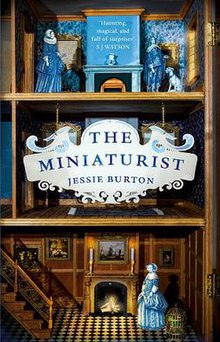
The Miniaturist by Jessie Burton - a Review and Analysis


Disclaimer: If you make a purchase through links in this blog, I may earn a commission from the sellers, but that does not impact the content of these posts or the cost to you as a consumer.

It is autumn in 1686, and eighteen-year-old Petronella (Nella) Oortman arrives at the grand house of her wealthy merchant husband in Amsterdam. Though they are married, they do not know each other. The marriage is one arranged for practical reasons - Nella's late father squandered her family's money, and so the marriage ensures survival. 

Nella, a young woman, still innocent to the ways of the world in many ways, enters into a darker and more violently passionate world. As we follow this character throughout the novel, we see her discover the darkness that people will embrace and endure for the sake of love, for the sake of being true to themselves. Even the new home to which she comes to live is darker and more exotic than surroundings she has known thus far in her life.

Understandably, Nella does not slip easily into her role in her new home. In fact, her unease is compounded by a husband, Johannes Brandt, who is either absent from the household or who seems to be wholly uninterested in any intimacy with his new wife. And, there is his sister, Marin, who is secretive and tense, perhaps even hostile. It is a home in which secrets are kept, and Nella, at first, is unsure of her place. At the beginning of the novel, the reader can feel how lonely she might have felt in such a situation. 


Finally, Johannes reaches for the curtains, and with an extravagant flourish, he pulls them aside. The women gasp. The inside of the cabinet is revealed, divided into nine sections, some lined with gold-embossed wallpaper and others with wooden panels.

- from The Miniaturist, Jessie Burton


Johannes gifts his new wife a cabinet model of the home that they share, a cabinet created by the miniaturist of the title. Throughout the story, the miniaturist is ever present and yet unseen. The figures and models that Nella receives from the eponymous craftswoman of the novel seem to be conveying messages to the recipient. As Nella ponders what it is the miniaturist is trying to tell her, she considers that this stranger might be sending warnings, has some supernatural ability to see into their lives, or perhaps even holds the fate of the household in her hands!


From my reading, secrets are a major theme of this story. The secrets that exist between the characters of the novel, the secrets that they keep from those outside of their house, and the reasons that they keep those secrets. Perhaps, it would be more correct to say that it is not so much the theme of secrecy, but the secrets that people feel a need to keep from the world when they dare to be true to themselves. When they dare to explore and embrace relationships that they know the world would condemn them for. This is a novel that explores the darkness that can come with love, not because of the love itself, but for the world in which that love exists.


Amsterdam of the late seventeenth century is drawn very well, the reader can tell that Jessie Burton has done her research there. Which isn't to say that the description of the time and place is done gratuitously, it isn't. Quite the opposite - the reader feels effortlessly taken away to that time. However, the characters could have, in my humble opinion, done with a little more fleshing out. But, I think, that is my only niggle.


If you are at all intrigued, and would like to purchase the book, you can do so at bookshop.org who support independent bookshops.

Also, if you enjoyed this piece, or anything else that I have written, please do consider following/supporting me over at ko-fi - it keeps me blogging and writing.


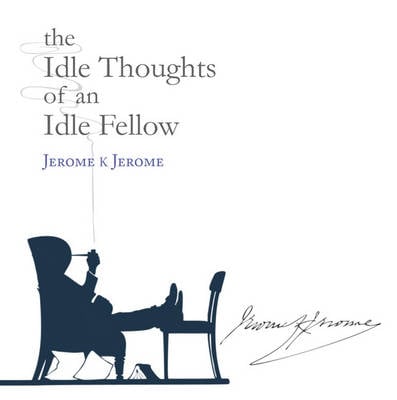
The Idle Thoughts of an Idle Fellow by Jerome K. Jerome - a Review and Analysis


Disclaimer: If you make a purchase through links in this blog, I may earn a commission from the sellers, but that has no impact on the content of this blog or the cost to you as consumer.

If you enjoy this piece, please consider following/supporting me over at ko-fi - it is very much appreciated, and it keeps me writing.

Jerome K. Jerome was born in 1859, in Walsall, Staffordshire. Leaving school at fourteen he took up work as a railway clerk, this being the first of a number of jobs he was to have, jobs that included acting, teaching, and journalism. His first book was published in 1885, On Stage and Off, and is a collection of humorous pieces about the theatre. This being well received, he followed the work with another collection of pieces - The Idle Thoughts of an Idle Fellow. This time around Jerome had turned his pen to such disparate subjects as the weather, memory, and furnished apartments - those little things that make up the day-to-day of life. Jerome was a humorous writer of note. He went on to write Three Men in a Boat - which I wrote about here, and Three Men on the Bummel - which I wrote about here.

Though some of Jerome's attitudes would today be considered outdated, lazy, or even offensive, but his writing of humour can still be considered top notch! As I'm sure many writers can attest to, writing humour is not easy, and writing humour well can be an agonising task. But, Jerome wrote humour very well, his most famous work - Three Men on a Boat - influencing humorists afterward. As I said, some of Jerome's attitudes might make the reader of the twenty-first century raise an eyebrow now and then. But, he was a writer of the late nineteenth and early twentieth century, and, personally, I can forgive writers from centuries gone by if their attitudes do not match contemporary thought and feeling. After all, society progresses incrementally, so you might expect, as you look further and further into the past, that society becomes incrementally less and less progressive.


What readers ask now-a-days in a book is that it should improve, instruct and elevate. This book wouldn't elevate a cow. I cannot conscientiously recommend it for any useful purpose whatever.

- Jerome K. Jerome, from the preface to Idle Thoughts of an Idle Fellow


Whilst it is true that your life may not gain some deeper meaning from reading Jerome's thoughts on being idle, on being in love, or on being in the blues, when you're looking to idle away a little time you could do worse than flick through the pages of Idle Thoughts . . . As far as works from the Victorian era go, this book probably isn't going to outshine Middlemarch or Tess of the D' Urbervilles any time soon, but it is a very well written and humorous little gem. And, though the bulk of the book doesn't concern itself with the highbrow, you might just find yourself reading a few very quotable paragraphs. And, for some, one of the benefits and pleasures of reading is finding those passages and paragraphs that speak to you, that put into words what you already feel.

Jerome tells us that idleness is really only pleasurable when it is stolen, taken between the hectic demands, expectations, and tasks levelled at us by life and the characters that we share the stage with. And, he, in this book, is great company for one of those evenings when you just want to sneak away some where quiet and cosy, maybe with a glass or two of something, and get a little lazy. Maybe you'd even fancy a pipe or two!


We do not hate, nor grieve, nor joy, nor despair in our thirties like we did in our teens.

- Jerome K. Jerome, from On Being in Love, The Idle Thoughts of an Idle Fellow


Though, as you might expect, some of Jerome's considerations and cogitations are not really the concerns of the modern reader, but some of the ponderings are ponderings that we have always pondered, and will likely ponder until our pondering days are done.


Half an hours' indulgence in these considerations works you up into a state of savage fury against everybody and everything, especially yourself, whom anatomical reasons alone prevent your kicking.

- Jerome K. Jerome, from On Being in the Blues, The Idle Thoughts of an Idle Fellow


Jerome touches on truths, and he writes with warm humour, and, in his best moments, he does both at the same time. I have much time for this book, and his others that I have discussed elsewhere in this blog.


If you enjoyed this post, please do consider sharing it on your favourite social media platform, and heading over to ko-fi to follow/support me there. Thank you. Keep reading good books, be kind, and get out in the sunshine when you can.


Bookish Controversies


Are there any books on your shelves that might be considered controversial? Are there any books there within which you could find some outdated attitudes, ideas, and values? Are there any authors on your bookshelves that are considered controversial, or even bigoted?

I can tell you, I would have to answer in the positive to each of those questions.

So, what do we do about it?

Recently Dr. Seuss Enterprises announced that it was going to discontinue the publication of six books written by Seuss because of racist content. This led to much discussion in the online book community, and beyond. There were those that thought the decision to be the right one. And, there were those who feared this to be another example of "cancel culture".

As we progress, societally, values will change. We will, rightly so, find ourselves having discussions that we haven't had before, realising that there are sections of society that we have neglected. And, as readers, we will find evidence of this in books from the past, books such as those written by Seuss. 

I have recently been reading books by Jerome K. Jerome, and between the pages of those books I have found passages describing races, ethnic groups, and women in a manner that has made me raise my eyebrows. I am a fan of Dickens, but the character of Fagin makes me feel a tad uncomfortable - accusations of stereotyping and prejudice have hung around the character since Oliver Twist was published. Fagin is often described as "the Jew" throughout the novel, and he is portrayed as being a deceitful, villainous, and covetous criminal. However, Dickens defended the character, saying that he was simply representing a section of society that truly existed. And, in a way, he was right - in Victorian London, there was a large, poor Jewish community who were, in some cases, driven to crime. However, they were driven to that by an anti-Semitic society that offered them little opportunity.

As an adult, I am able to consider history, changes in values, evolving conversations, etc. I am able to appreciate that available knowledge evolves. However, coming back to Seuss, children's books are a little different - it's a little difficult to try and explain to a five year old the nuances, and just how the authors depictions of people is ignorant and prejudiced. And, it isn't only Seuss whose work has been reevaluated, there are a number of children's stories that have been revised or found themselves under the spotlight in the light of evolving discussions - Dr. Dolittle, Peter Pan, and Little House on the Prairie, to name a few.

There are some, mind you, that might argue these books offer parents the opportunity, and are a useful tool, to discuss with their children how ideas have changed, to demonstrate that once commonly held views can prove to be wrong and unfair. That's definitely a discussion worth having, in my opinion, for it would be awfully conceited of us if we were to believe that our own commonly held beliefs, at this point in history, are infallible and ought to be kept forever and always.


The discussion around environmental issues seems to have moved toward the fore in recent years. With animal welfare a concern for many, climate change, decreasing levels of biodiversity, etc., and these problems still receiving less attention than they truly deserve, we can probably expect future generations will consider our general attitude towards environmental issues, and how we discuss them in our literature, to be lacking. That's but one example, and we are probably writing about things now, with little thought or consideration, that, to future generations, will seem problematic and toxic. 


Conversations evolve. In recent times, it has been suggested that thrillers and murder mystery novels which rely upon female victims ought to be addressed. And so they should! It is very difficult, critics say, to address the problem of violence against women in our society when we are being sold violence against women as entertainment, for titillation. However, others might argue that, violence against women being the problem that it is in our society it warrants discussion and analysis in art and creative work. 

Perhaps then, is it the way in which we discuss these topics? If a novel really addresses an issue, can we forgive it and the author for relying on old tropes? If the issue is considered well, and not just used to sell the story?


In modern times, the conversation around how historically, culturally, societally marginalised groups are represented in novels has become a real topic of conversation amongst the reading/writing community. For this, in my opinion, we should be proud. If you are reading this blog post then you probably understand the power, the comfort, the wisdom, that can be found in books. That special way in which they can help us feel a little less alone. We ought to strive toward making sure this beautiful gift is afforded to as many people as possible, we ought to take into consideration those sections of society that have been denied that gift too long.


So, what of problematic authors? Do we separate the art from the artist? Or, is there a moral obligation to give up those works when we discover the writer to be toxic?

Since J.K. Rowling made some problematic comments online with regards to gender and trans people her stock has fallen amongst readers. She was once considered one of the most successful authors, and particularly kind, having given much to charity. However, she could now arguably be best described as problematic. I have read, in online comment threads, trans readers who, having loved the Harry Potter franchise, are hurt that novels in which they found hope, comfort, and joy have been written by someone who denies their existence.

When the Harry Potter books were originally published I didn't have much interest in them. I have never read a Harry Potter novel. However, they, being a series of books that feature on a multitude of "Must Read" lists, and Rowling having been considered one of the most successful writers of modern times, did eventually pique my interest. So, I have a couple of second hand Potter books on my shelves that I will get around to reading eventually. When I do, I will feel a tad uncomfortable about doing so, to be honest. However, I think that might be okay. If I am aware of the discomfort, that's okay, right? Besides, they are second hand books, so it's not like I sent any money Rowling's way.

It's okay, right?


When it comes to the question of whether or not we separate art from artist, I think that needs to be left up to the reader. For those that have been hurt by comments made by an author, there are many who have found comfort in that author's work. As I mentioned above, there are trans readers who are hurt by Rowling's words not just because of what she has said, but because they have enjoyed her writing. Even the people on the receiving end of a person's ignorance can find themselves in a position of having enjoyed that author's work! 

But, how to navigate that, when made aware of the author's questionable feelings?

Well, that is up to you, I think. It may be that you decide to only purchase that author's work second hand, therefore denying them your money. It may be that you have to give up what you have loved. It may be that you have to go back and reread the books, knowing what you know, to see if you see anything there that you hadn't seen before . . .

I think that has to be up to you.


There have been some very dangerous precedents set in the past by people who have felt justified in telling others what they can and cannot read. And, the vilest and most evil of acts can be built on good intentions. Books ought to explore many aspects of what it is to be human, to be alive, even, I fear, some of the uglier sides to us and our societies. I think, personally, we must leave it up to the readers what they read. We mustn't aggressively press readers to justify their choices. We must, readers and writers, begin to include those that have not been included in books. We must think about how characters are portrayed. We should read with questioning minds. We should read widely . . .

Or, at least, that's just my opinion.

If you have any questions or comments on this one, feel free to drop a comment. Perhaps I got something wrong, perhaps you disagree with something I said, perhaps you want me to show my working out . . . Whatever it is, I am happy to discuss. I kind of feel, this post being one about bookish controversies, there may be some of you that have a point of view you wish to share!


Anyway, if you enjoyed this post, feel free to follow and/or support me over at ko-fi - it keeps me writing, and it is very much appreciated! Thank you!


Bookish Thoughts of a Rather Bookish Blogger . . .


I have sometimes wished that I were a little more 'sex, drugs, and rock 'n' roll'. You know, a tad more exciting, a few exploits and stories to tell. Alas, I am much more 'books, snacks, and country walks'!

That's not a bad set of ingredients, if you should ever wish to make up a decent enough sort of fellow, but it doesn't make for the sort of person you'd want to find yourself stuck with at a dinner party. Or any sort social gathering really. Trust me on that one.

Let me tell you a few things about myself, to see if you agree. Firstly, I would love it if my waistline could decrease in circumference without my having to give up the foods I love, or engage in any kind of strenuous exercise. I love long walks, and dogs, and, being the creative thinker that I am, I love combining those two loves into, yes, you guessed it, long walks with dogs. And, finally, if you couldn't tell already from the bookish theme running throughout this lil ol' blog of mine, I have a thing for books too!

Like I said, not a bad set of interests, but they don't make for an interesting sort of guy either.

Anyway, I am not that great with people. When I find myself in conversation with one, I often come away with the feeling that at least one of us has been about as awkward as being hit on at a funeral. Usually I suspect that it's me. I wish I were awkward in a sort of flustered, yet charming, Hugh Grant manner, circa Four Weddings and a Funeral. But, I fear, I am more Steve Carrell in  The Office type awkward.

It's far better for everyone if I just stick my nose in a book!


A book is a dream you hold in your hands.

- Neil Gaiman


Neil might be right, and a bookish guy like me (the sort that almost always takes a book almost anywhere) can often appreciate the way in which both books and dreams, when you have finished with them and you've come back to the real world, can remain with you in a sort of hazy, haunting way . . . Problem is, I do sometimes much prefer the books and dreams, and try to get to them as much as I can, sometimes neglecting my real life concerns in favour of the dreams and literature. A hopeless bibliophile. A bookaholic. And, not only do I love to read, but I also harbour writerly ambitions! 

My loved ones are becoming concerned.


As I draw to the end of this little rambling reverie, I find myself wondering, "What the hell am I writing about here?"

And, to that, I say, "Uuuh . . ."

This is a rather a bookish blog, and I sometimes, sort of, think aloud here. Because, I think that the internet can be a great place to find friends, or a sort of community. It can be a place where you feel a little less alone. And, who knows, as you read these rather bookish thoughts, from a rather bookish blogger, perhaps you recognise a little of something in the words.

Or, maybe you don't. I dunno. But, either way, I hope you at least enjoyed the read.


If you did enjoy the read, please consider following/supporting me over at ko-fi - it keeps me in my writerly endeavours, and is very much appreciated!


PS - I am currently reading The Idle Thoughts of an Idle Fellow by Jerome K. Jerome, and yes, the title of this blog post is a reference to that work, if that's what you were wondering.

Read lots, go for long walks, be kind. See you soon!

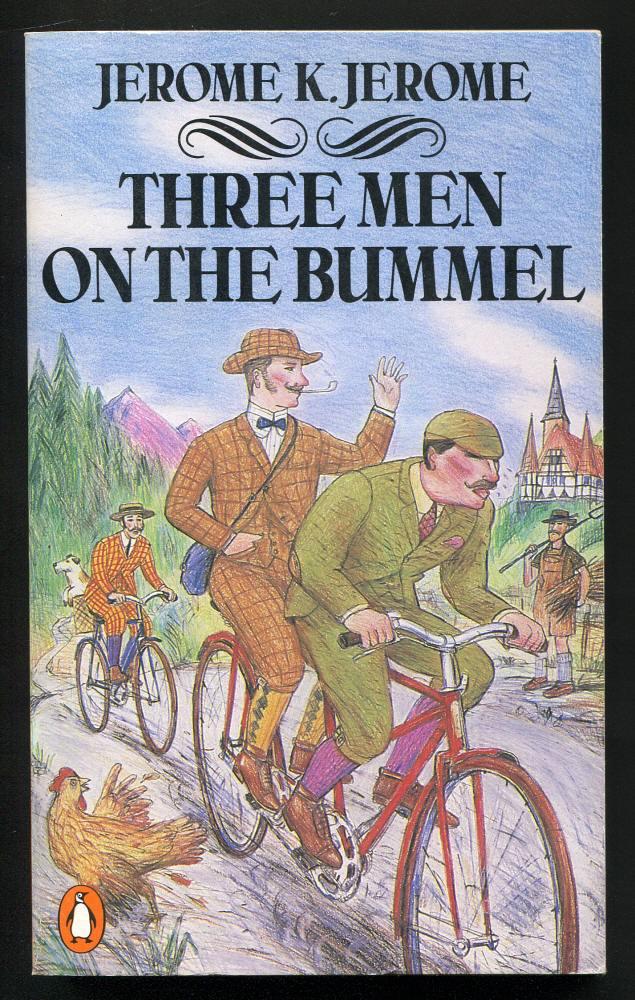
Three Men on the Bummel by Jerome K. Jerome - an analysis


Disclaimer: towards the end of this post is a link to purchase this book. If you make a purchase through links in this blog, I may earn a commission from the sellers, but this does not impact the cost to you or the content of this blog.

'A "Bummel",' I explained, 'I should describe as a journey, long or short, without an end; the only thing regulating it being the necessity of getting back within a given time to the point from which one started.'

In this follow up to Jerome's Three Men in a Boat (which I discussed here), we find ourselves again in the company of J., George, and Harris. This time around they hit upon the idea of a bicycle trip in Germany, and we follow these three affable English chaps as they navigate their tour. As in its predecessor, J., a thinly fictionalised version of Jerome, casts a humorously insightful eye upon his travels, his companions, and their encounters.

Their travels in a foreign land mean the obvious observations with regard to cultural differences, language barriers, and the misunderstandings that follow. However, Jerome's observations are rarely cruel or pointed, instead his humour is more a gentle and warm poking in fun. In fact, Jerome writes of Germany and its people with warm regard. He describes the country so fondly that I found myself wondering how the book was considered in Britain only fifteen years after its original publication, when the first world war was heading into its second year - perhaps this is one of the reasons that this novel never achieved the popularity of Three Men in a Boat.

Three Men on the Bummel is just as well written and humorous as its predecessor, but it does lack the unifying thread that . . . in a Boat has, and hangs together a little more loosely because of that. However, in my opinion, this novel is still worth a read if you enjoy well written humorous books. As I said with regard to . . . in a Boat (see above for the link to previous blog post), there are parts of . . . on the Bummel which are outdated, but overall Jerome is a warm and humorous writer.


The Germans are a good people. On the whole, the best people perhaps in the world; an amiable, unselfish, kindly people. I am positive that the vast majority of them go to heaven. Indeed, comparing them with the other Christian nations of the earth, one is forced to the conclusion that heaven will be chiefly of German manufacture. 

As I mentioned, it could very well be that passages such as these are what have kept this novel from achieving the recognition and success of Three Men in a Boat. Just fourteen years after publication, the first world war had commenced. And, before unease with all things German could settle very much, Britain was engaged in war with Hitler's Nazi Germany only twenty-one years after that. Jerome's warm regard for the country and its people couldn't stand up to that.

The only real problem with the novel is that it has to be compared to Three Men in a Boat. As stated already, the book is just as well written as its predecessor, it only lacks the unifying thread. Basically, the Thames provides a common thread throughout the first book, and the second hangs a little more loosely together without that. But, Jerome is a good writer, and delivers a novel otherwise as well written as . . . in a Boat.

If you would like to join J., George, and Harris on their tandem plus one, as they cycle the Black Forest, you can purchase Three Men in a Boat and Three Men on the Bummel here, from Bookshop.org, who support independent bookshops.

If you found this piece interesting, or at least enjoyable, please consider supporting me over at ko-fi, it keeps me writing and blogging. And, it's very much appreciated. Thank you in advance.

Read lots of books, go for long walks, and be good. See you soon.

Five Reading Goal Suggestions


Reading is, in my humble opinion, much more pleasurable when your bookshelves are stocked with a diverse selection. So, with that in mind, and following my last post about finding more time to read (which can be read here), here is a brief list of reading goals that I hope you might interesting, inspirational, or at least enjoyable!

A book that means a lot to someone close

When I read a book I feel as though I am immersing myself into its world. The characters, the world they inhabit, become a little part of my own world each time I open the covers. I know that I am not the only one! Books ask a bit more from us, in my opinion, than do films and television. And, because of our having to engage that much more, the connection with the world inside can be that much stronger. With that in mind, it might be interesting to immerse yourself into a book that means a lot to a loved one - not only might you find a new book that you love, you could come away learning something about a person in your life. Conversely, perhaps you could try this with someone you're not so close to!

Reading aloud and sharing

If you have children, you know how great it can be to do this one. I discussed how this can be beneficial in a previous blog post here. But, there's no reason that we should only be reading aloud to our kids. Reading to our partners can be a beautiful, intimate, fun experience. And, in just the same way that reading a book that means much to someone else, reading aloud to someone else allows us to share an emotional, pleasurable, or interesting experience. Or, perhaps, when we can have get togethers again, pull out a book of selected poetry and get people to read from that. Bear in mind though, this one only really works if all parties are enjoying the experience - don't go reading out loud to anyone that doesn't ant to hear it!

Read outside your comfort zone

Most of us have our favourite genres. However, life is that much more interesting when we explore, at least a little, outside of our comfort zones. If we don't, we risk getting stuck in a rut. So, if you like horror, why not give romance a go. Or, maybe you can usually be found with your eyes firmly glued to the pages of a fantasy novel; well, why not give YA a chance? Do a little research, find something that sounds appealing, and see if you can't lose yourself a little in something unfamiliar.

Read a book set locally

Do a little internet search for books that are set locally to your home town. It might be interesting to look at your world through the eyes of the author's characters. If the book is a romance, a horror, or historical, how has the author made use of the location to tell the story? Does the atmosphere of the novel make you look at your home town a little differently? I did a post previously on site specific reading here which ties in nicely with this suggestion, if you fancy some other ideas on how to add to the world in the book you are reading.

Research reading

So, you've just finished a novel and you loved the world that you found yourself immersed in between the pages there. What now? Well, what if you go read some non-fiction relevant to the novel you've finished. Just finished The Miniaturist by Jessie Burton? There must be some interesting history books about seventeenth century Amsterdam. Or, if you have been reading Dickens, perhaps you could read about Victorian era London. If fantasy is your thing, then maybe you'd be interested in reading about the origins of mythical creatures. Pick up a non-fiction book, perhaps it will add to your appreciation for the world of fiction you've just left behind.


Well, I hope that helped, or at least entertained. If you did enjoy this post, please do consider supporting me on ko-fi - it keeps me writing and is very much appreciated.

Thank you. See you again soon!

How to Find More Time for Reading


If you enjoy this post, or any of the others, please consider supporting me over at ko-fi - it keeps me writing, and it is very much appreciated!


In my personal experience, reading seems to be one of those things that people give up first when they are trying to manage their time. And, given the many benefits of reading (you can read a blog post I have written on the benefits of reading here), plus the pleasure that can be gotten from a good book, that seems a real shame to me. However, it is also understandable - books require time and effort from the reader that other forms of entertainment might not.

With this in mind, I thought I would share a few practices - I think they might help make time for those that aren't ready to give up their love for literature. I have practiced some of these, and others I have observed being practiced, with some degree of success.

Staking a claim

My first piece of advice would be to simply stake a claim to a certain amount of time in the day, half an hour perhaps, if you can get it, letting others know what that time is for, and that it is important to you that you have that time for yourself. We ought not to feel so selfish about taking some time for ourselves. I mean, as long as the kids aren't on fire and the house is still standing, I think they can spare you for a little while.

If you feel guilty, take a look at that - it might be that you have nothing to feel guilty about. Our lives ought not to be made up purely of the demands and expectations put on us by others, and you're allowed to claim a little time in the day for yourself. So, set aside some reading time in your diary, or set an alarm on your phone for an appointment with yourself - I have done both, and I've found them helpful.

Audio-books

A practice that I haven't tried much myself, but which I have seen work wonders for others, is reading with your ears!

With platforms like Audible or YouTube, audiobooks are a great way for some to insert some bookish time into their day. You can listen to a book during the commute to/from work; when you're on the school run; when you're at the gym; as you're cooking dinner . . . The list can go on!

Personally, I don't make use of audiobooks, but I have seen others make use of them, and they've said that they are a great way to get more reading time. I have even known some who find picking up a book to read a bit of a chore, but who enjoy listening to an audiobook!

Multiple reader

Something that I have started doing, something which I didn't used to do, is to read more than one book at a time. I used to think that by giving my attention to more than one book at a time it would be a distraction but, personally, I haven't that to be the case. I usually have my "main read", and then there's a "side read" (usually something a bit lighter than my main read) that I pick up between the chapters of my main read. I understand if this doesn't work for you - I was averse to the suggestion myself for some time - but I thought I would put it out there.

Concealed book

Perhaps my favourite suggestion would be to always have a book about your person. When we go out into the world, we often find ourselves with time on our hands at some point - waiting in lines, in waiting rooms, travel time, etc. Having a book in my bag has been a blessing on more than one occasion. I do love to take long walks as well, and a long walk can be made even better when you've a good book to dip into when you find a good bench in a quiet spot. Though, if you'll take my advice, you'll be mindful of others when you take out your book. And, just because the dates going well, or that Zoom meeting is a bit boring, it's probably going to cause more issues than it'll solve if you take out your book!


I hope that these few suggestions have been useful, or at least enjoyable. And don't forget, seriously, their ought not to be any guilt or shame in claiming some joy in our day-to-day lives. 


Read lots, be good, do good. And, I'll see you again soon.

Oh, and Happy Easter weekend! (If you have dogs, be careful they don't get in the chocolate or the hot cross buns!)


You can find me on ko-fi here, a platform for creators and supporters of those creators - it keeps me blogging and pursuing other writerly goals, and every supporter is very much appreciated. Plans for rewards and commissions are being considered and may be added soon! 

Three Men in a Boat (To Say Nothing of the Dog!) by Jerome K. Jerome - a Review and Analysis


If you enjoy this post, there is a link at the end where you can purchase this book. 
Disclaimer: If you make a purchase through links in this blog, I may earn a commission from the sellers, but that impacts neither how much you are charged, or the content of this blog.

Feeling that they are suffering from almost any upset that you might care to mention, three affable chaps - Harris, George, and J. - decide that what they need is a nice and relaxing little holiday. Settling on the idea that they, and J.'s dog (Montmorency), ought to set off on a little fortnight trip along the Thames in a boat, the reader follows along on their comical adventure.

J. (a fictionalised Jerome K. Jerome), Harris, and George are all thoroughly pleasant English chaps, the sort that you might think typical of the late Victorian era. Some of the book is outdated now, but the humour and the warmth is still fresh and witty, and the three warm and comic characters we follow along the Thames are a joy to read. They are just exactly the kind of chaps that one might hope to have as friends and holiday companions. There isn't really a pragmatist amongst them, but that just means they are definitely romantic and idealist enough to make the journey enjoyable!

They really are a bit of a mess in there execution of the whole thing sometimes (therein lies the entertainment!) but they are an unforgettable crew. I really have enjoyed tagging along on their trip along the Thames.


Let your boat of life be light, packed with only what you need - a homely home and simple pleasures, one or two friends, worth the name, someone to love and someone to love you, a cat, a dog, and a pipe or two, enough to eat and enough to wear, and a little more than enough to drink; for thirst is a dangerous thing.

- Three Men In a Boat, Jerome K. Jerome, chapter 3


If the above quote ignites a little flame of pleasant appreciation within you, I think you just might have time and appreciation for our three river-faring protagonists. It speaks to me. But then, I am a bit of a dreamer too, for whom a lazy wending and winding along an English river in summer sounds an absolute joy. And, I would also fail comically in some of the practical requirements of such a trip so . . .

The three men of the title anticipate a journey filled with peace and quiet. However, they come up against the joys of the glorious English weather, having to endure their own cooking, and roughing it in the outdoors. Amongst other things. Jerome's humour is warm and his insights never mean-spirited. There may be the odd passage where you find yourself raising an eyebrow at the odd outdated idea or attitude, but other than that Three Men in a Boat is a warm and funny book with an appeal that has endured for one-hundred-and-thirty-two years for good reason!

If you've enjoyed this post, or any of the others, then please consider supporting me through my ko-fi page - it keeps me pursuing my writerly endeavours, and is very much appreciated.

If you would like to purchase a copy of Jerome K. Jerome's hilarious story of one of probably the worst holidays in literature, Three Men in a Boat, you can do so here, with bookshop.org, who support independent book shops.

Read plenty of books, be good, be nice to dogs, feed the birds, drink something nice. And, see you soon.